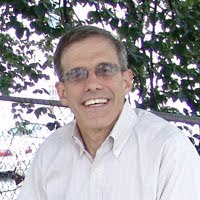
Still fit, feisty, and staunchly independent at eighty-seven, my mother concedes only two infirmities to the march of time: a measured, slightly unsteady gait and recurring lapses in her short-term memory -- although during a recent psychological test at which I was present to bear witness, I fared no better than she when asked to regurgitate three objects a mere five minutes after they were fed to us by the examiner: "Table, lamp, and, I'm sorry, but I don't remember the third (and I'm in the furniture business)."
Occasionally, however, she will startle and amuse me by extracting some priceless, heretofore unknown nugget from her distant past and flashing it before me in all its revelatory brilliance. Last week, for example, when the topic of miscarriage came up, she innocently gave notice that, during her pregnancy with me, "spotting," as she called it, dispatched her to bed for an extended period of rest, lest my fetus suffer such a fate -- although many who know me well might consider the term an apt characterization of my subsequent arrival and career.
Seriously, though, supposing the worst had ensued, how does one confront the curious concept of his non-birth? To state the obvious, every person's life is unique to him and him alone, and to think that I might have been incarnated in some other form (such as either of my younger siblings) is to engage in mind-numbing -- and frightening -- sophistry.
Even to contemplate some sense of emptiness, of having been deprived of a whole lifetime of experiences, is a fallacious exercise in science fiction, as absurd as an eighteenth-century George Washington on horseback or my loquacious father lamenting the premature deaths that would forever preclude the former's enjoyment of air travel or the latter's of a portable phone. Of course, the analogy is imperfect; while dreamers and visionaries might conjure up some future marvels (which indeed often materialize into the commonplace), a non-being imagines -- and regrets -- nothing.
The reality of one's singular existence hanging by a thread as tenuous as a routine act of conception or an accidental organ malfunction has provocative implications, should he be inclined to pursue them.
I remember reading excerpts from a eulogy delivered at the funeral of some celebrity or dignitary, perhaps Senator Ted Kennedy, during which the minister sermonized that "death is a mystery," an assertion which struck me as irrefutable yet myopic.
Every creature born or hatched on earth is destined for extinction after its brief eruption on a continuum that stretches infinitely backward and forward, a scenario for which the evolutionary biologist Richard Dawkins suggests the metaphor of a "laser-thin spotlight moving inexorably along the immense ruler of time. Everything that the beam has passed is lost in the darkness of the past; everything ahead of it is hidden in the darkness of the yet unborn. Only what is lit . . . lives." (Yalom, p. 197)
The mystery here is not the void that lies outside the parameters of the spotlight, which in its limitlessness and omnipresence seems the natural order of the universe, but rather the illumination itself -- the emergence of human life fifty thousand years ago on one level; on another, the birth of my first grandchild a few weeks hence, a self-aware individual whose eighty-plus span of years will encompass all the wonders of joy and sadness, love and loss, success and failure, and hope and despair.
While not my intention, reflections on such matters invariably lure one into a maze of religious controversy. If the true believer appreciates life as a blessing from his Creator, and thus no mystery, the skeptic -- or rationalist -- like me regards it as a fortuitous confluence of biological impulses and chemical elements 4.6 billion years after myriad specks of cosmic dust coalesced into a planet -- but still inexplicable. If the former anticipates death as an eternally mysterious heaven or hell, the latter recognizes it as final in its nothingness.
If I had ever pondered intimations of immortality, they expired twenty-four years ago with the quiet suddenness of a candle being extinguished when I was summoned to my father's deathbed in the house where I now reside. Stricken with lung cancer, he had managed to sustain his normal, active, gregarious schedule for about two years until breathing difficulties, a throat tumor, and a steady deterioration of his strength and bodily functions drove him into seclusion for the last six months of his life.
Arriving moments after he succumbed peacefully to pneumonia, gazing with helpless sadness as his pajama-clad remains -- from which the spark that had invigorated them for sixty-eight years had vanished forever -- were wheeled on a stretcher through the hallways, I was shaken by the duality of an inconvenient truth. Although I was forty years young and in excellent health, my invincibility was a fantasy, and I was fated to follow in this last of my father's footsteps as I had in so many others. And, with all due respect to those whose faith is anchored in bedrock, any lingering or subsequent consciousness for the inert form lying before me seemed outside the realm of possibility.
Unless it hits close to home, involving a family member or dear friend, death, particularly our own, is not something we think about often. Why would we, since it's not a pleasant prospect? Aside from reminding us of our own mortality -- but only for an instant, like the prick of a needle, after which we revert to a blissful inattention -- the death of another evokes a peculiar range of emotions.
The most natural and transparent of these is sympathy for his survivors, who will no longer delight in his presence or be animated by their mutual love. More problematic is an empathetic sense of loss, since, while we mourn a deceased for whom there is no future, however uncomfortable or pleasurable it might have been, a life snuffed out prematurely is obviously more poignant than the demise which relieves the suffering of an aged or critically ill person. And finally, can any among the living, no matter how absolute his grief, wholly stifle the somber elation of knowing his own span of time has not yet run its course?
I am one for whom our contemporary culture's sanitation of death is an essential subterfuge, although there is a fine line between hygiene and denial. I've been reading about war lately, and, putting aside a congenital reluctance to test my physical courage, I can't imagine facing the carnage of battle or even dealing with the inevitable as a physician, nurse, or mortician. While I can devour murder mysteries -- and their gruesome renderings of gunshot wounds, strangulations, and postmortem dissections -- like tortilla chips, the thought of a real live dead body makes my stomach churn -- even one all decked out in his finest suit lying in a coffin.
Doesn't this viewing enhance the illusion that he's merely resting, or perhaps retired to a better place?
The danger of banishing death to hospital corridors and retirement homes is that it shelters us from the baneful reality we are increasingly reluctant to accept. While this is not the place to examine the moral and economic consequences of prolonged end-of-life care -- mainly because I lack the expertise to do so -- anecdotal evidence suggests that well-intentioned family members -- and providers -- will subject terminally ill patients to painful, complex, unproven, and costly treatments when there is no hope of cure.
It's easy for a disinterested observer to be judgmental. I wonder, however, if I would have permitted a surgeon to remove my father's obstructive throat tumor and replace it with the tracheotomy he despised if I had known the procedure would extend his life only two months.
If my father knew he was dying, and was calmly resigned to it -- after all, what other choice did he have -- having been blessed with good health for sixty-four years, I have only apprehended death as an accident. For years I harbored an irrational fear of flying, envisioning at the onset of minor turbulence a vicious wind shear or catastrophic mechanical failure upending the plane and sending me, after a terrifying thirty-second free fall, to oblivion.
I can recall half a dozen near misses, while running or riding in an automobile, in which sheer luck, it seemed, enabled me to avoid being struck while blindly trudging through an intersection or escape by inches a fatal collision when the driver, either myself or a friend, wasn't paying attention or lost control of the vehicle.
I've had instantaneous death-wishes, imagining myself stepping in front of an oncoming truck, for no reason whatsoever, and once, years ago, when my self-esteem -- never very sturdy back in those days -- had been shattered by a failed romance, I even contemplated suicide. Fortunately, I wasn't able to muster the fortitude to stop my car on the Rivermont Bridge, clamber atop its concrete barrier, and fling myself into the creek bed below.
Now, however, with my life in order, I'm aiming to match the longevity of Lynchburg's most illustrious citizen, former president of Randolph-Macon Woman's College, bank officer, and Community Trust executive, at whose century birthday fundraising celebration I recently had the honor of contributing a dose of topical humor, including the top ten reasons why I want to live to one hundred.
In spite of my mother's legacy, I expect the odds are against me. While death is a certainty, no one knows when the Grim Reaper will come calling. And as one grows older, and he comprehends that the path before him "no longer ascends but slopes downward toward decline and diminishment," concerns about death -- whether in indirect, explicit, or acute forms -- are never far from mind. (Yalom, p. 5)
In his magisterial opus, Staring at the Sun: Overcoming the Terror of Death, Psychotherapist Irvin D. Yalom tackles the difficult subject with elegance, sensitivity, and insight.
Yalom's philosophical worldview -- which I find very appealing -- is existential; that is, it is grounded in mankind's unique capacity to reflect on the enigma of existence. It "embraces rationality, eschews supernatural beliefs, and posits that life has arisen from random events." Though humans crave some manner of immortality, they are "finite creatures . . . thrown alone into existence without a predestined" course of experience, each of whom must decide how complete, happy, ethical, and meaningful his journey will be. (Yalom, pp. 200, 202)
Such a vision, says Yalom to a rabbi training to be a therapist but conflicted by his religious background, is incompatible with the worship of an omniscient, omnipresent personal God, watching, protecting, and guiding his servants. Challenged by the rabbi to explain how he can live without a "belief in something greater than himself" to provide him "with meaning, wisdom, morality, and divine comfort," Yalom replies that those commodities are not dependent on a belief in God, and that he doesn't need religion to supply him a moral compass. (Yalom, pp. 192-194)
Yalom references the Athenian thinker Epicurus (341 B.C.E - 270 B.C.E) as the proto-existential psychotherapist. Epicurus believed that the root cause of human misery is the fear of death. While in most individuals the phobia is subconscious, its pervasiveness may be inferred from its various disguised manifestations, such as excessive religiosity, overzealous accumulation of wealth, and ruthless lust for power, all of which offer illusions of perpetuity. (Yalom, pp. 2,78)
To alleviate man's anxiety about death, Epicurus constructed a series of arguments that have been analyzed and debated for over two thousand years.
First, Epicurus taught that the soul is mortal and perishes with the body. He stood diametrically in oppostion to his one-hundred-year predecessor, Socrates, whose expectation that his soul would outlast his physical dissolution and join an eternal community of like-minded truth seekers foreshadowed and influenced Christian theology. In fact, Epicurus vehemently condemned the priests and prophets who augmented their authority by threatening heretics with a harrowing post-existence. He insisted that, with the expiration of body and soul, there is no consciousness, and therefore no reason to regret what has been lost or fear the gods or an afterlife. (Yalom, pp. 79-80)
"Epicurus posits that death is nothing to us, because the soul is mortal and is dispersed at death. What is dispersed does not perceive, and anything not perceived is nothing to us. In other words: where I am, death is not; where death is, I am not." We won't know when death happens nor that we are dead, because it and life can never co-exist. Therefore, what is there to fear? (Yalom, pp. 80-81)
Epicurus's third argument -- and most convincing to me -- "holds that our state of nonbeing after death is the same state we were in before our birth." In the opening lines of his autobiography, Speak, Memory, the great Russian novelist, Vladimir Nabokov, captures the essence of this symmetry, as he writes: "The cradle rocks above an abyss, and common sense tells us that our existence is but a brief crack of light between two eternities of darkness. Although the two are identical twins, man, as a rule, views the prenatal abyss with more calm than the one he is heading for." (Yalom, pp. 81-82)
Is it not logical for one to conclude that after death he returns to his pre-birth nothingness, rather than be distracted, even tormented, by the "incongruous and convoluted" notion of an unpredictable afterlife? (Yalom, p. 82)
Our sense of an ending, our comprehension of finality, should lead, says Yalom, not to despair, but to hope. Because, as great thinkers down through the ages have reminded us, while the physicality of death destroys us, the idea of death saves us. (Yalom, p. 33)
"Cicero said that 'to philosophize is to prepare for death.' St. Augustine wrote, 'it is only in the face of death that a man's self is born,' Many medieval monks kept human skulls in their cells to focus their thoughts on mortality and its lessons for the conduct of life. Montaigne suggested that a writer's studio should have a good view of a cemetery in order to sharpen his thinking." (Yalom, pp. 32-33)
In Charles Dickens's A Christmas Carol, a visit to Ebenezer Scrooge from the Ghost of the Future, and visions of his neglected corpse, strangers pawning his possessions, and acquaintenances unmoved by his death transform him from an isolated curmudgeon into an amiable benefactor. In Leo Tolstoy's epic War and Peace, a last-minute reprieve from a firing squad prompts Pierre to mend his sensual ways and embark on a new course with zest and purpose. (Yalom, pp. 31-32)
Another signature example of such renewal is the protagonist of Tolstoy's The Death of Ivan Ilyich, a self-absorbed, arrogant bureaucrat suffering from a fatal abdominal illness. As his condition worsens, he realizes his preoccupation with prestige, appearance, and money has been the mechanism for him to deny his mortality, and he berates his sympathizers for their hypocrisy in offering false promises of recovery. Then, in a moment of great clarity, following a remarkable internal conversation, he grasps that he is dying badly because he has lived badly, that "in shielding himself from death, he has shielded himself from life as well." (Yalom, p. 35)
Even as his last breath approaches, Ivan Ilyich finds it is not too late for redemption. He grows aware that not only he but all things must die. For the first time, "he feels a tenderness for others: for his young son kissing his hand; for the servant boy who nurses him in a natural, loving manner; and even . . . for his young wife. He feels pity for them, for the pain he has inflicted, and ultimately dies not in agony but in the joy of intense compassion." (Yalom, pp. 35-36)
The catalyst for my own awakening experience was the sight of my father's dead body -- a silent alarm signaling that the mysteries of life, good health, and an inquiring mind are too precious to squander, even if their proper exercise might entail stretching my comfort zone and shouldering some unwanted responsibilities, which had been all too easy for me to defer or foist upon others. The burdens proved to be more rewarding than onerous, and fostered my maturity as a competent manager, empathetic mentor, involved citizen, and intermittent extrovert.
Yalom merely confirmed what I already knew when he wrote: "a confrontation with death arouses anxiety but also has the potential of vastly enriching life." (Yalom, p. 75)
APPENDIX
Here are the top ten reasons why I want to live to one hundred: I want to see the Arabs and Jews stop shooting at one another; I want to get a dividend from my investment in Bluffwalk; I want to drive up Rivermont Avenue without ruining my car chassis; I want to drive two ways on Fifth Street; I want to see a new Heritage High School; I want to attend a show at the restored Academy of Music Theater; I want to see Virginia beat Virginia Tech in a football game; I want to see the Democrats win a local election; I want to see the Republicans win a national election.
And the number one reason I want to live to one hundred is, well, use your imagination.
REFERENCE
Yalom, Irvin D. Staring at the Sun: Overcoming the Terror of Death. San Francisco: Jossey-Bass, 2008.
Tuesday, May 7, 2013

Wednesday, April 3, 2013
Pseudo-Vegetarian
Fortunately these days, survival -- at least the aspect of it that pertains to sustenance -- is idiot proof, although to most palates not very appetizing.
If one of my father's most overworked, and hardly original, as I recently discovered online, quips about my mother -- "Why don't you go onto the kitchen?" he would reply to her anniversary wish to be taken somewhere she had never been before -- belied her enviable culinary skills, its applicability to me is painfully undeniable.
Of course, haunted by her congenital Jewish guilt, she graciously shoulders the blame for my ineptitude, claiming to have barred my two siblings and me from her private workplace from birth to autonomy, and thereby condemning us to an adulthood of either dependence or deprivation.
But if one can learn to read, swim, speak in public, and manage a multi-million dollar business, surely competence at cooking shouldn't be so elusive. Witness the sumptuous Passover dinner prepared by none other than my brother -- a product of the same upbringing as me -- a few nights ago at his handsomely renovated and decorated historic home perched atop Daniels Hill in Downtown Lynchburg: matzah ball soup, baked chicken with red gravy, steamed asparagus, and your choice of Paula Deen mashed potato casserole or sweet potato bake laced with cinnamon, nutmeg, and brown sugar.
If this is the start of a new tradition, it's just in time, as our eighty-seven-year-old matriarch may be weary of hosting these family holiday gatherings.
While I maintain that one's cooking proficiency is dependent on his possessing at least a modicum of manual dexterity, that argument deteriorates into a rather lame excuse when I acknowledge that my brother's hand-eye coordination is probably no more than marginally better than mine -- good enough for him to master the art of sailing, but too rudimentary to generate even a passable golf or tennis swing.
Nevertheless, challenged as I am by i-pod shuffles, lawn mower ignition, car-top carrier assembly, electronics routing, and vitamin bottle seals, and habitually too clumsy to transfer food from pot to plate to mouth without soiling countertop or shirt, how could I ever be expected with any level of competence or comfort to dice onions and peppers, measure seasonings, whip up eggs, flour, and butter, and calculate time and temperature such that a perfected, complete composition emerges -- even if I had the desire?
Which I don't. And "since one man's meat is another man's poison" -- not just metaphorically, but in my case also ironically and literally, as will be revealed in good time -- I'd much rather read a book, slog through one of these blogs, run five miles, or rearrange the display in one of my furniture stores than attempt to prepare a respectable meal (or trim the shrubbery or water the flowers, which I don't do either).
While I enjoy quality as well as anyone, I find my friends' and fellow travelers' fixation on identifying the preeminent place to dine in a given situation, regardless of inconvenience or price, a superfluous and wasteful exercise. "What (or where) I eat is not all that important to me," I blurted out a few weeks ago seated among a group of furniture executives at a very fine Dallas restaurant, two of whom promptly set me straight. One pulled out his cell phone, and flashed photos of two of his most recent delectable creations, expounding upon each with a thousand-word reconstruction of the recipe, while the other gently reprimanded, "You would appreciate food more if you were able to do that."
It's the eternal conundrum: which came first? And even I will concede that "not cooking" as the causal factor leading to "not caring" makes more sense that the obverse.
The embarrassing truth is that I can't deny both a sensual satisfaction in my own dismal diet and a pathetic pride in my minimal self-sufficiency, dependent as they are on the modern wonders of processing, packaging, preservation, and microwaves and on a frightening lack of variety.
At least for breakfast I've diversified into a second brand of dry cereal, Special K, to alternate with the Kellogg's Complete Bran Flakes I seized upon years ago as a purported source of fiber, always flavored with lactose-free Silk Soymilk which, when recommended by my physician, I immediately acquired a taste for. I used to tease myself with instant oatmeal once a week and scrambled eggs on Sunday, but sadly both have fallen victim to laziness and impatience. A banana and occasionally half of a toasted everything bagel (with Smart Balance, never cream cheese, although I don't know which is worse) complete the menu.
As for coffee drinking, therein lies a tale replete with ironies. Having scorned the bean for five decades, during which time I regularly brewed a wake-up cup for my wife, I am now moderately addicted, yet missing the Cuisinart she absconded with when she sought greener pastures. It probably doesn't matter, since I prefer to savor my only bold and black cup of the day in the quietude of my office or car, purchased from either the Downtown White Hart Cafe or the nearest Starbucks.
If breakfast sounds boring, consider that for lunch, with the exception of a volunteer board meeting or an infrequent social rendezvous, I have brown-bagged a peanut butter (Jiff Extra Crunchy) and jam (Smucker's Blackberry) sandwich on whole wheat bread and a bag of carrots every working day for at least the past twelve years. Winter, spring, summer, or fall, aboard plane, train, or automobile, the ingredients preserve well enough even for a forty-eight or seventy-two hour supply should my schedule take me away from my home stash. And far from wearing out its proverbial welcome, after an extended vacation feasting on midday soups, salads, and tortilla wraps, nothing whets my taste buds more than the sight of old faithful.
But even I couldn't stomach the same meager offering the two or three nights a week I'm left to my own resources for dinner -- when JSG doesn't invite me to her house for grilled salmon, shrimp fettucine, or pesto pasta, or when we don't take pot luck at one of Lynchburg's finest, most often Oakwood Country Club, where the conviviality is intoxicating and Chef Mena never disappoints.
My home rule of thumb is never spend more than fifteen minutes total (maybe twenty, if pizza is involved) in preparation and ingestion. During the course of two weeks, exhibiting a monotony and mindless brand loyalty typical of my compulsive behavior, I will rotate through Morningstar veggie burger and chicken-flavored patties (on toasted buns with condiments), California Kitchen margherita pizza, Amy's vegetarian lasagna or enchilada, Green Giant broccoli and cheese or spinach, Bird's Eye skillet garlic shrimp -- all frozen -- Knorr's rice sides, Annie's mac and cheese, and Bumble Bee solid white albacore with mayonnaise and sour pickles. For snacking or a side dish, a few forkfuls of Kroger cole slaw, potato salad, or cottage cheese straight from the container and an occasional apple are serviceable enough.
In a more ambitious past, I used to bake some fresh fish or boil up some spaghetti, but long ago concluded that neither was worth the energy nor more palatable than any of the above.
I don't keep any ice cream or cookies in the house, although I have been known to sample some of AEG's Chocolate Chip Cookie Dough when passing through her mother's kitchen. All resolve collapses, however, when I wander within sniffing distance of the grocery snack aisle and inevitably succumb to the baneful lure of crunchy corn chips, which I can consume by the bushel, with or without salsa, since it's a little too messy even for me to dip, read, and recline simultaneously in my bedroom lounge chair. I prefer Frito-Lay Santitas, which at two dollars more than the Kroger brand for two bags a week won't unduly tax me. After all, look what I'm saving on store-bought pizza as compared to carry-out.
Astute observers may have detected a provocative theme in this depressing recitation: a noticeable absence of meat. While I admit that a thick filet or juicy sirloin burger is surely more healthy than all the salt, preservatives, and whatever else poses as food with which I am daily poisoning my body, I continue to adhere stubbornly but not exclusively to the pseudo-vegetarian lifestyle which my daughter introduced to me fifteen years ago when she recommended a classic volume on the subject: Diet for a New America, by John Robbins.
Let's just put it this way: I'm not a crusader, like the out-of-town friend of mine who, having recently embraced veganism and waxed ad nauseum on its merits at every meal during our three-day encounter. When someone serves me meat and I'm hungry, I eat it; if there are options, I try to avoid it, although too often gluttony trumps will-power.
This past weekend, for example, temptation ran rampant at the Zeta Psi Fraternity in Charlottesville, where JSG's two sons are brothers (and the most cool, according to the pledge class vote), and where the alumni/parents annual solidarity rally featured fattened pig, fowl, and cow silently screaming for consumption.
Having to mingle among total strangers for hours didn't help the self-control of an inveterate introvert who shuns small talk and dissipates his nervous energy by attacking buffets with a vengeance. I couldn't resist grabbing two heaping barbecue sandwiches (and copious helpings of collard greens and macaroni and cheese) on Friday night and handfuls of chicken fingers (and potato chips) at the following afternoon's poor excuse (other than the Bloody Marys) for a tailgate -- a shameful and needless display of overindulgence (and carnivorousness) which I commanded myself to suppress at the next feeding frenzy. And indeed I managed to fill my plate and stomach quite nicely with a garden salad garnished with fresh fruit, pasta with artichokes and spinach, broccoli spears, and wild rice.
I'm back on the meat-less wagon again, hopefully until the regionally-renowned New Vistas School Feast one month hence, where the homegrown, slow-roasted, tenderized four-legged fare, exquisitely seasoned, wrapped, sliced, and diced by an incongruous band of cookin' fools -- of which I am the fool part -- is not to be missed.
Is it plausible that a single book could persuade a person who subsisted for years on a ridiculous regimen of hot dogs and hamburgers to forswear the sweet, salty, succulent pleasures of protein-rich edible flesh? Why not? Michael Lewis's Moneyball converted me from Chicago Cubs to Oakland A's fandom in a slim two-hundred-and-fifty pages; although it took over a thousand, Robert Caro's scathing biography of Robert Moses, The Power Broker, spawned a curious affection for New York City; and Last Train to Memphis, Peter Guralnik's impassioned chronicle of the rise of Elvis Presley, inspired an even more unlikely love affair between the immortal King and a tone-deaf skeptic.
A New American Diet, says Robbins, will mitigate animal mistreatment, improve individual health, and conserve natural resources.
Whether or not one is as conscious of animal suffering and intelligence as Robbins is, his indictment of the "farming" conditions in which this food group is "manufactured" is chilling.
Today's chicken factories are huge, windowless warehouses, where eighty thousand birds are stacked five each in 16-by-18 cages from floor to ceiling in a controlled environment -- including twenty-four-hours-a-day intensive lighting -- designed to maximize production. (Robbins, pp. 54-55) Babies (females of the species, that is; males are disposed of at birth by the thousands) arrive fresh from incubators or mechanized hatcheries with their life expectancy compressed from fifteen years to two if they are "layers" -- bred for their eggs -- and to two months if they are "broilers" -- bred for their legs, thighs, and breasts.
Driven berserk by lack of space and by frustration of their primal need for a social order, the chicks peck viciously trying to kill or eat each other, a vice remedied by snipping their beaks, which seriously impairs their ability to eat and drink. (Robbins, pp. 56-57) Toes are similarly excised to prevent their entanglement in wire mesh. (Robbins, p. 61)
Virtually all poultry raised in the United States are fed antibiotic-infused diets selected to increase broiler weight or egg laying as cheaply as possible. Almost all suffer from bone and muscle weakness, skin irritation, bodily deformities, and a multitude of diseases, including cancer -- hardly a concern of their plant managers. As Fred Haley, president of a 225,000-hen Georgia farm put it: "The object of producing eggs is to make money. When we forget this objective, we have forgotten what it is all about." (Robbins, pp. 66-67)
Pigs fare no better -- crammed as they are by the thousands into seven-foot-square individual cages in crowded industrial complexes where automated systems deliver what passes for nutriment and large pits beneath slatted floors catch urine and feces. All day long they breathe poisonous ammonia, methane, and hydrogen sulfide exuded by their excreta. With no room to move about, they don't burn up calories, and thus gain weight faster and more profitably. (Robbins, pp. 80-83) Tails, which are usually nipped at first, are cut off to prevent the crazed beasts from cannibalizing one another.
They are routinely fed recycled solid waste -- including their own manure -- which contains high levels of toxic arsenic, lead, and copper, and water channeled from dung pits back through oxidation ditches. It's not suprising that eighty percent contract pneumonia by the time of slaughter, or that millions die prematurely every year from dysentery, cholera, abscesses, trichinosis, and pseudo-rabies. (Robbins, pp. 93-94)
A cow's misery begins when it is herded aboard a cattle truck post-auction for transport to its own fattening farm or milk factory. Starved of food and water for up to seventy-two hours, many will die from exposure to extreme heat or cold, from suffocation, or, unless inoculated by the drug chloramphenicol, from a form of pneumonia known as "shipping fever." Chloramphenicol may be used in humans in rare instances as an antibiotic of last resort, but for a significant percentage can cause aplastic anemia, a fatal blood disorder. (Robbins, pp. 105-106)
Arriving at their destination exhausted, depleted, and ill, the bulls will be transformed into fat-producing steers by removing their testicles either by using pliers or by restricting the blood supply with a ring until they drop off. Now deficient in natural hormones, they will be injected with synthetics, which may leave carcinogenic residues. Most will be de-horned so they will not injure each other in their overcrowded pens, where each is confined to fourteen square feet of living space. (Robbins, pp. 107-109) On huge feedlots they are stuffed with sawdust, shredded newspaper, plastic hay, inedible tallow and grease, poultry litter, and cardboard scraps. (Robbins, p. 110)
Cows bred exclusively and continuously for milk production yield three times as much as their bucolic, foraging ancestors, yet at a cost of a life expectancy shrunk from twenty years to four. (Robbins, p. 111)
Veal calves are subjected to the most egregious and grotesque abuses. Newborns are removed from their mothers at birth and placed in tiny 22" by 54" stalls, where they are essentially immobilized for the four months required to pile three-hundred-fifty pounds on their stunted, frail frames and fed an iron-deficient, anemia-inducing diet designed to preserve their pinkish-white tenderness. Deprived of water, they will engorge themselves on a liquid mixture of government surplus skim milk and fat. Susceptible to pnuemonic and enteric diseases, they will be dosed with nitrofurazone, a known carcinogen, and the aforementioned chloramphenicol. (Robbins, pp. 113-117)
In order to fulfill a meat-loving nation's insatiable appetite, every day in the United States nine million chickens, turkeys, pigs, calves, and cows perish at the hands of their masters. Their throats are slit, and then "their bodies are hooked behind the tendons of their rear legs and swung up into the air on overhead tracks . . . Once bled, their hooves are clipped off with a gigantic pair of hydraulic pincers. They are then beheaded, skinned . . . and finally eviscerated." (Robbins, pp. 134, 137)
If the conventional wisdom is -- or was at the time of his writng (1987) -- that such butchery is necessary for human health and happiness, Robbins amasses a plethora of contradictory evidence.
Despite its sophisticated medical technology and temperate climate, the United States -- one of the highest consumers of animal products in the world -- has one of the lowest life expectancies of industialized nations. Three cultures with the longest life spans -- the Ecuadorian Vilcambas, the Himalyan Hunzas, and the Abkhasians of the Black Sea -- are either totally vegetarian or close to it. Active well into their eighties, their elderly show no signs of the degenerative diseases so prevalent among our own. (Robbins, pp. 154-155)
According to Robbins, persistent concerns that vegetarians may not ingest enough protein are unfounded.
Citing biochemist and nutrient researcher Roger Williams, Robbins concludes that a person's daily protein requirement ranges from a low estimate of two-and-a-half percent of his calorie intake to a high estimate of over eight percent. Even at ten percent, a diet of beans, fresh vegetables, and brown rice meets these needs. While not very appetizing, eating exclusively wheat, oatmeal, pumpkin, or cabbage would also be sufficient. (Robbins, pp. 174-176)
Robbins enlists Nathan Piritkin, to whose Longevity Centers thousands of seniors made pilgrimage, as further authority. "I don't know any nutrition expert," writes Piritkin, who "can plan a diet of natural foods resulting in protein deficiency, so long as it's not deficient in calories." (Robbins, p. 185)
High-protein diets have been shown to correlate to calcium loss and bone density deterioration, or osteoporosis. In any given population, the greater the intake of protein, the more common and severe will be the osteoporosis -- as demonstrated by native Eskimos, who consume 250 to 400 grams a day from fish, walrus, and whale, and have the highest rates in the world. (Robbins, pp. 193-194)
In 1964, President Eisenhower's heart specialist, Dr. Paul Dudley White went to visit the Hunzas to see for himself if they were indeed living in good health to exceedingly old ages. His blood pressure, blood cholesterol, and electrocardiogram studies revealed not a trace of coronary heart disease, even in ninety-year-old men. In a published report, he suggested a causal link between the Hunza's vegetarian diet and his findings. (Robbins, p. 215)
Atherosclerosis is the process by which arteries accumulate fatty and waxy deposits on their inner walls; when these plaques rupture into the arteries, they may form clots and blockages, and cause heart attacks. (Robbins, p. 205)
By 1987, the evidence was clear. "Diets high in saturated fat and cholesterol raise the level of cholesterol in the blood, produce atherosclerosis, and lead directly to heart disease and strokes. Diets low in saturated fat and cholesterol lower the level of cholesterol in the blood, decrease atherosclerosis, and lower the likelihood of heart disease and strokes." (Robbins, p. 208)
Cholesterol is not found in any plant food, not in grains, vegetables, nuts, seeds, fruits, legumes, or vegetable oils. Our entire intake of cholesterol is derived from meat, fish, dairy products, and eggs, with the last containing the highest content in milligrams per 100-gram portion, 550, compared to seventy for beefsteak and sixty for chicken. (Robbins, pp. 210-211)
The purveyors of these products, desperate to further the illusion that they are beneficial and to bolster their market share, regularly sponsor multi-million-dollar public relations campaigns, reassuring the public that the egg is "incredible and edible," that beef is "nutrition you can sink your teeth into," and that "milk does a body good." (Robbins, p. 220)
Underwritten by generous subsidies from milk producers, the National Dairy Council has become the nation's de facto nutrition educator, indoctrinating teachers and cafeteria personnel with its biases and supplying educational materials at extremely low prices. One of its typical messages encourages children to "drink milk at every meal and enjoy foods like cheese, ice cream, and cream of tomato soup with a pat of butter on top." (Robbins, p. 231)
Turning his attention to the nation's second leading cause of death, Robbins cites a 1984 report in Advances in Cancer Research, which concluded that "none of the risk factors for cancer is . . . more significant than diet and nutrition," and quotes Dr. Gio B. Gori, National Cancer Institute official, who testified before Congress that the factors principally responsible for a dietary imbalance leading to cardiovascular disease and cancer were "meat and fat intake." (Robbins, pp. 251-252)
The more fat people consume, the greater is their risk for colon cancer, at least according to statistics which showed (in 1975) deaths per 50,000 males from the disease rising from fewer than 2.5 for populations consuming fewer than 50 grams of fat per day to more than 12.5 for populations (U. S. and Canada) consuming 150 grams per day. (Robbins, p. 255)
Lack of fiber in a person's diet is another high-risk factor for colon cancer -- and high-fat meat, eggs, and dairy products provide no fiber whatsoever. Solid animal fats take longer to pass through the intestines, allowing them to absorb more of the toxins the body is trying to eliminate. Fiber accelerates the transit time, and, in addition, helps to dilute, bind, and deactivate many carcinogens. (Robbins, pp. 254-256)
In a 1977 study which monitored the habits of 122,000 women for several decades, Dr. Takeshi Hirayama and his colleagues at the National Cancer Research Institute in Tokyo found that those who consumed meat, eggs, and butter and cheese daily had four, three, and two times greater risks respectively of getting breast cancer than those who ate little or no meat. Hirayama also identified similar correlations between vegetarian diets and later menarche (onset of menses) -- at age seventeen compared to age thirteen -- and between later menarche and lower incidence of breast cancer. (Robbins, pp. 264-266)
Low-fat high-fiber diets can improve the lifestyle of diabetics, both by reducing their vulnerability to devastating atherosclerosis and by minimizing their dependence on insulin therapy. A common cause for the malfunction of a diabetic's insulin -- which controls his blood sugar levels -- is the high level of fat in the blood. Studies have demonstrated that patients restricted to very low-fat diets and forbidden any sugar consumption were able to eliminate or decrease significantly their medication. (Robbins, pp. 275-276)
The cholesterol, salt, and saturated fat present in meat, fish, and eggs are all risk factors for hypertension, or high blood pressure: cholesterol, by clogging and narrowing the arteries; salt, by drawing water into the blood and increasing the pressure on the arterial walls; and saturated fat, by causing platelets to stick together and impede the flow of blood. All three conditions can be alleviated by replacing the culprits with whole grains, fresh vegetables, and fruits. (Robbins, pp. 294-296)
Does anyone doubt that obesity -- literally, excessive levels of body fat -- has become a national crisis? And according to Harvard nutritionist Dr. Jean Meyer -- and anyone else with a modicum of common sense -- individuals who obtain most or all of their calories from cereal grains, dried beans and peas, potatoes, and pasta will lose weight and boost their chances of living longer and healthier. (Robbins, p. 289)
Today's factory farm livestock are not only mutant reservoirs of saturated fat, they are also carriers of residues from pesticides, hormones, insecticides, tranquilizers, herbicides, and growth stimulants whose potential harm to the environment and to humans is incalculable. (Robbins, p. 309)
And "pesticides don't just affect the creatures who ingest them first. They infiltrate animal tissue, and then, as one organism is eaten by another, they build up in higher concentrations at each successively higher rung of the food chain." (Robbins, p. 314)
Consider the following substances formerly in widespread usage which have been banned for their toxicity: the growth hormone diethylstilbestrol (DES), which caused sexual disorders in adults and children and cancer in animals in tiny doses; the pesticide DDT, which decimated bird populations by the hundreds of thousands; the pesticide dieldrin, a potent carcinogen which also attacked the liver and central nervous system; and the waxy or liquid lubricants known as PCB's, which caused cancer, low sperm counts, birth defects, and deterioration of the immune system. (Robbins, pp. 312-332)
Other poisonous compounds have survived official scrutiny. Cattle, pigs, and sheep are regularly fed huge quantities of contaminated fish. They are routinely doused with the parasite-killing toxaphene, which causes cancer, birth defects, and bone disintegration in laboratory animals. To exterminate flies, they are sprayed with dichlorvos, for which a human's acceptable daily intake is 0.004 mg/kg, which he will exceed by being exposed in a room for nine hours wearing a small No-Pest strip. Their feed may be enriched with the larvicide Rabon, which can damage the nervous system and send people into convulsions. (Robbins, pp. 335-336)
Reducing or eliminating one's intake of meats, fish, dairy products, and eggs is the most effective way to limit his exposure to toxic chemicals. "Meat contains fourteen times more pesticides than plant foods; dairy products five-and-a-half more." A new direction for America's agriculture and diet preferences would ensure better health and a cleaner environment for current and future generations. (Robbins, pp. 342-344)
It would also mean a more intelligent use of natural resources, which is to me the most compelling of Robbins's arguments.
More than half the agricultural acreage in the United States is harvested for its livestock, which consume five times as much soybeans and grains -- including eighty percent of its corn and ninety-five percent of its oats crop -- as would supply the country's human population. Cattle are notoriously inefficient machines, devouring sixteen pounds of soybeans and grains to yield one pound of table beef. (Robbins, pp. 350-351)
A given acreage can feed twenty times as many pure vegetarians as it can typical American meat-eaters. (Robbins, p. 352) According to the Department of Agriculture, an acre of land that can grow 20,000 pounds of potatoes will produce, if used for cattle feed, only one-hundred-sixty-five pounds of beef. (Robbins, p. 353)
Cycling grain through livestock also wastes ninety percent of its protein, ninety-six percent of its calories, one hundred percent of its fiber, and one hundred percent of its carbohydrates. (Robbins, p. 352)
To provide lebensraum for grazing livestock, thousands of American forests are cleared every year. "More than three times as much meat is derived from formerly-forested land . . . as is derived from range land. That ratio is climbing every year as erosion and soil degradation claim more and more of the nation's range land and ever more forest land is converted to . . . land (for meat producing)." (Robbins, p. 361)
The devastation reaches beyond domestic borders, as Central and South American countries which raise beef for American export are cutting swaths through their priceless rain forests. Amounting to only thirty percent of the world's forests, these natural treasures are home to eighty percent of its land vegetation, a substantial portion of its oxygen supplies, half its plant and animal species, and to essential base components of life-saving medicines. (Robbins, pp. 363-364)
Because tropical rain forests store their nutrients in their trees and plants, the cleared land is so poor in minerals that revitalization is slow to nonexistent. Further, without a plant cover, the heavy rains cause extremely rapid soil erosion. Meanwhile, native populations suffer from lack of food and high prices, as cattle feed cultivation takes priority over subsistence farming. (Robbins, p. 364)
In the United States, where there is less rainfall, over half the total water consumption is allocated to the irrigation of livestock feed and fodder farmland and to manure disposal. (Robbins, p. 367)
"To produce a single pound of meat takes an average of 2500 gallons of water -- as much as a typical family uses for all its combined household purposes in a month . . . It takes less water to produce a year's food for a pure vegetarian than to produce a month's worth for a meat-eater." Rice production requires only ten percent as much water as meat production, and wheat only one percent as much. (Robbins, p. 367)
In the Pacific Northwest, Washington, Oregon, and Idaho lose seventeen billion kilowatt hours of electricity annually, as copious amounts of water are pumped from the Snake and Columbia Rivers to support feed and livestock production, resulting in nuclear power plant construction and higher electricity prices for area residents. (Robbins, pp. 368-369)
Every year thirteen trillion gallons of water are drawn from the Ogallala Aquifier to quench the thirst of all the grain-fed beef roaming the High Plains regions of Kansas, Oklahoma, Colorado, Nebraska, and New Mexico -- more than is used to grow all the country's fruits and vegetables. There and elsewhere, the disproportionate share of water swallowed up by the meat industry creates shortages which necessitate drilling deeper and more expensive wells. (Robbins, pp. 370-371)
The squandering of other natural resources is equally startling. A study sponsored by the Departments of Energy and Commerce showed that one-third of country's raw materials is invested in the production of meats, eggs, and dairy products. Economists Robin Hur and David Fields report that "a nationwide switch to a diet emphasizing whole grains and fresh fruits and vegetables -- plus limits on the exports of nonessential fatty foods -- would . . . cut imported oil requirements by over sixty percent," and increase the supply of renewable energy one-hundred-twenty to one-hundred-fifty percent. (Robbins, pp. 374-377)
The livestock of the United States deposit twenty times as much excrement as its entire human population. Over half -- a billion tons a year -- comes from confinement operations from which it cannot be recycled. Much of it ends up in rivers and streams, nourishing algae and depleting oxygen reserves. Animal waste generates ten times as much water pollution as human waste. (Robbins, pp. 372-373)
Even if Robbins's manifesto (or others preaching a similar message) should ever reach a broader audience, American dining habits are too firmly entrenched, and the meat and dairy marketers too powerful for any significant dietary revolution to take root. Two nights ago, at a Furniture Market banquet, having thoroughly digested all Robbins's incontrovertible reasons why the poor slab of beef hunkered down on the plate before me was a scourge to my body and indeed the whole earth, I still can't resist the temptation, and chew through about half despite its predictable lack of taste and tenderness.
Cursing myself for such irrational behavior, I silently repeat the pseudo-vegetarian's solemn oath, and swear never to let flesh pass my lips again.
REFERENCE
Robbins, John. Diet for a New America. Tiburon, California: HJ Kramer, 1987.
If one of my father's most overworked, and hardly original, as I recently discovered online, quips about my mother -- "Why don't you go onto the kitchen?" he would reply to her anniversary wish to be taken somewhere she had never been before -- belied her enviable culinary skills, its applicability to me is painfully undeniable.
Of course, haunted by her congenital Jewish guilt, she graciously shoulders the blame for my ineptitude, claiming to have barred my two siblings and me from her private workplace from birth to autonomy, and thereby condemning us to an adulthood of either dependence or deprivation.
But if one can learn to read, swim, speak in public, and manage a multi-million dollar business, surely competence at cooking shouldn't be so elusive. Witness the sumptuous Passover dinner prepared by none other than my brother -- a product of the same upbringing as me -- a few nights ago at his handsomely renovated and decorated historic home perched atop Daniels Hill in Downtown Lynchburg: matzah ball soup, baked chicken with red gravy, steamed asparagus, and your choice of Paula Deen mashed potato casserole or sweet potato bake laced with cinnamon, nutmeg, and brown sugar.
If this is the start of a new tradition, it's just in time, as our eighty-seven-year-old matriarch may be weary of hosting these family holiday gatherings.
While I maintain that one's cooking proficiency is dependent on his possessing at least a modicum of manual dexterity, that argument deteriorates into a rather lame excuse when I acknowledge that my brother's hand-eye coordination is probably no more than marginally better than mine -- good enough for him to master the art of sailing, but too rudimentary to generate even a passable golf or tennis swing.
Nevertheless, challenged as I am by i-pod shuffles, lawn mower ignition, car-top carrier assembly, electronics routing, and vitamin bottle seals, and habitually too clumsy to transfer food from pot to plate to mouth without soiling countertop or shirt, how could I ever be expected with any level of competence or comfort to dice onions and peppers, measure seasonings, whip up eggs, flour, and butter, and calculate time and temperature such that a perfected, complete composition emerges -- even if I had the desire?
Which I don't. And "since one man's meat is another man's poison" -- not just metaphorically, but in my case also ironically and literally, as will be revealed in good time -- I'd much rather read a book, slog through one of these blogs, run five miles, or rearrange the display in one of my furniture stores than attempt to prepare a respectable meal (or trim the shrubbery or water the flowers, which I don't do either).
While I enjoy quality as well as anyone, I find my friends' and fellow travelers' fixation on identifying the preeminent place to dine in a given situation, regardless of inconvenience or price, a superfluous and wasteful exercise. "What (or where) I eat is not all that important to me," I blurted out a few weeks ago seated among a group of furniture executives at a very fine Dallas restaurant, two of whom promptly set me straight. One pulled out his cell phone, and flashed photos of two of his most recent delectable creations, expounding upon each with a thousand-word reconstruction of the recipe, while the other gently reprimanded, "You would appreciate food more if you were able to do that."
It's the eternal conundrum: which came first? And even I will concede that "not cooking" as the causal factor leading to "not caring" makes more sense that the obverse.
The embarrassing truth is that I can't deny both a sensual satisfaction in my own dismal diet and a pathetic pride in my minimal self-sufficiency, dependent as they are on the modern wonders of processing, packaging, preservation, and microwaves and on a frightening lack of variety.
At least for breakfast I've diversified into a second brand of dry cereal, Special K, to alternate with the Kellogg's Complete Bran Flakes I seized upon years ago as a purported source of fiber, always flavored with lactose-free Silk Soymilk which, when recommended by my physician, I immediately acquired a taste for. I used to tease myself with instant oatmeal once a week and scrambled eggs on Sunday, but sadly both have fallen victim to laziness and impatience. A banana and occasionally half of a toasted everything bagel (with Smart Balance, never cream cheese, although I don't know which is worse) complete the menu.
As for coffee drinking, therein lies a tale replete with ironies. Having scorned the bean for five decades, during which time I regularly brewed a wake-up cup for my wife, I am now moderately addicted, yet missing the Cuisinart she absconded with when she sought greener pastures. It probably doesn't matter, since I prefer to savor my only bold and black cup of the day in the quietude of my office or car, purchased from either the Downtown White Hart Cafe or the nearest Starbucks.
If breakfast sounds boring, consider that for lunch, with the exception of a volunteer board meeting or an infrequent social rendezvous, I have brown-bagged a peanut butter (Jiff Extra Crunchy) and jam (Smucker's Blackberry) sandwich on whole wheat bread and a bag of carrots every working day for at least the past twelve years. Winter, spring, summer, or fall, aboard plane, train, or automobile, the ingredients preserve well enough even for a forty-eight or seventy-two hour supply should my schedule take me away from my home stash. And far from wearing out its proverbial welcome, after an extended vacation feasting on midday soups, salads, and tortilla wraps, nothing whets my taste buds more than the sight of old faithful.
But even I couldn't stomach the same meager offering the two or three nights a week I'm left to my own resources for dinner -- when JSG doesn't invite me to her house for grilled salmon, shrimp fettucine, or pesto pasta, or when we don't take pot luck at one of Lynchburg's finest, most often Oakwood Country Club, where the conviviality is intoxicating and Chef Mena never disappoints.
My home rule of thumb is never spend more than fifteen minutes total (maybe twenty, if pizza is involved) in preparation and ingestion. During the course of two weeks, exhibiting a monotony and mindless brand loyalty typical of my compulsive behavior, I will rotate through Morningstar veggie burger and chicken-flavored patties (on toasted buns with condiments), California Kitchen margherita pizza, Amy's vegetarian lasagna or enchilada, Green Giant broccoli and cheese or spinach, Bird's Eye skillet garlic shrimp -- all frozen -- Knorr's rice sides, Annie's mac and cheese, and Bumble Bee solid white albacore with mayonnaise and sour pickles. For snacking or a side dish, a few forkfuls of Kroger cole slaw, potato salad, or cottage cheese straight from the container and an occasional apple are serviceable enough.
In a more ambitious past, I used to bake some fresh fish or boil up some spaghetti, but long ago concluded that neither was worth the energy nor more palatable than any of the above.
I don't keep any ice cream or cookies in the house, although I have been known to sample some of AEG's Chocolate Chip Cookie Dough when passing through her mother's kitchen. All resolve collapses, however, when I wander within sniffing distance of the grocery snack aisle and inevitably succumb to the baneful lure of crunchy corn chips, which I can consume by the bushel, with or without salsa, since it's a little too messy even for me to dip, read, and recline simultaneously in my bedroom lounge chair. I prefer Frito-Lay Santitas, which at two dollars more than the Kroger brand for two bags a week won't unduly tax me. After all, look what I'm saving on store-bought pizza as compared to carry-out.
Astute observers may have detected a provocative theme in this depressing recitation: a noticeable absence of meat. While I admit that a thick filet or juicy sirloin burger is surely more healthy than all the salt, preservatives, and whatever else poses as food with which I am daily poisoning my body, I continue to adhere stubbornly but not exclusively to the pseudo-vegetarian lifestyle which my daughter introduced to me fifteen years ago when she recommended a classic volume on the subject: Diet for a New America, by John Robbins.
Let's just put it this way: I'm not a crusader, like the out-of-town friend of mine who, having recently embraced veganism and waxed ad nauseum on its merits at every meal during our three-day encounter. When someone serves me meat and I'm hungry, I eat it; if there are options, I try to avoid it, although too often gluttony trumps will-power.
This past weekend, for example, temptation ran rampant at the Zeta Psi Fraternity in Charlottesville, where JSG's two sons are brothers (and the most cool, according to the pledge class vote), and where the alumni/parents annual solidarity rally featured fattened pig, fowl, and cow silently screaming for consumption.
Having to mingle among total strangers for hours didn't help the self-control of an inveterate introvert who shuns small talk and dissipates his nervous energy by attacking buffets with a vengeance. I couldn't resist grabbing two heaping barbecue sandwiches (and copious helpings of collard greens and macaroni and cheese) on Friday night and handfuls of chicken fingers (and potato chips) at the following afternoon's poor excuse (other than the Bloody Marys) for a tailgate -- a shameful and needless display of overindulgence (and carnivorousness) which I commanded myself to suppress at the next feeding frenzy. And indeed I managed to fill my plate and stomach quite nicely with a garden salad garnished with fresh fruit, pasta with artichokes and spinach, broccoli spears, and wild rice.
I'm back on the meat-less wagon again, hopefully until the regionally-renowned New Vistas School Feast one month hence, where the homegrown, slow-roasted, tenderized four-legged fare, exquisitely seasoned, wrapped, sliced, and diced by an incongruous band of cookin' fools -- of which I am the fool part -- is not to be missed.
Is it plausible that a single book could persuade a person who subsisted for years on a ridiculous regimen of hot dogs and hamburgers to forswear the sweet, salty, succulent pleasures of protein-rich edible flesh? Why not? Michael Lewis's Moneyball converted me from Chicago Cubs to Oakland A's fandom in a slim two-hundred-and-fifty pages; although it took over a thousand, Robert Caro's scathing biography of Robert Moses, The Power Broker, spawned a curious affection for New York City; and Last Train to Memphis, Peter Guralnik's impassioned chronicle of the rise of Elvis Presley, inspired an even more unlikely love affair between the immortal King and a tone-deaf skeptic.
A New American Diet, says Robbins, will mitigate animal mistreatment, improve individual health, and conserve natural resources.
Whether or not one is as conscious of animal suffering and intelligence as Robbins is, his indictment of the "farming" conditions in which this food group is "manufactured" is chilling.
Today's chicken factories are huge, windowless warehouses, where eighty thousand birds are stacked five each in 16-by-18 cages from floor to ceiling in a controlled environment -- including twenty-four-hours-a-day intensive lighting -- designed to maximize production. (Robbins, pp. 54-55) Babies (females of the species, that is; males are disposed of at birth by the thousands) arrive fresh from incubators or mechanized hatcheries with their life expectancy compressed from fifteen years to two if they are "layers" -- bred for their eggs -- and to two months if they are "broilers" -- bred for their legs, thighs, and breasts.
Driven berserk by lack of space and by frustration of their primal need for a social order, the chicks peck viciously trying to kill or eat each other, a vice remedied by snipping their beaks, which seriously impairs their ability to eat and drink. (Robbins, pp. 56-57) Toes are similarly excised to prevent their entanglement in wire mesh. (Robbins, p. 61)
Virtually all poultry raised in the United States are fed antibiotic-infused diets selected to increase broiler weight or egg laying as cheaply as possible. Almost all suffer from bone and muscle weakness, skin irritation, bodily deformities, and a multitude of diseases, including cancer -- hardly a concern of their plant managers. As Fred Haley, president of a 225,000-hen Georgia farm put it: "The object of producing eggs is to make money. When we forget this objective, we have forgotten what it is all about." (Robbins, pp. 66-67)
Pigs fare no better -- crammed as they are by the thousands into seven-foot-square individual cages in crowded industrial complexes where automated systems deliver what passes for nutriment and large pits beneath slatted floors catch urine and feces. All day long they breathe poisonous ammonia, methane, and hydrogen sulfide exuded by their excreta. With no room to move about, they don't burn up calories, and thus gain weight faster and more profitably. (Robbins, pp. 80-83) Tails, which are usually nipped at first, are cut off to prevent the crazed beasts from cannibalizing one another.
They are routinely fed recycled solid waste -- including their own manure -- which contains high levels of toxic arsenic, lead, and copper, and water channeled from dung pits back through oxidation ditches. It's not suprising that eighty percent contract pneumonia by the time of slaughter, or that millions die prematurely every year from dysentery, cholera, abscesses, trichinosis, and pseudo-rabies. (Robbins, pp. 93-94)
A cow's misery begins when it is herded aboard a cattle truck post-auction for transport to its own fattening farm or milk factory. Starved of food and water for up to seventy-two hours, many will die from exposure to extreme heat or cold, from suffocation, or, unless inoculated by the drug chloramphenicol, from a form of pneumonia known as "shipping fever." Chloramphenicol may be used in humans in rare instances as an antibiotic of last resort, but for a significant percentage can cause aplastic anemia, a fatal blood disorder. (Robbins, pp. 105-106)
Arriving at their destination exhausted, depleted, and ill, the bulls will be transformed into fat-producing steers by removing their testicles either by using pliers or by restricting the blood supply with a ring until they drop off. Now deficient in natural hormones, they will be injected with synthetics, which may leave carcinogenic residues. Most will be de-horned so they will not injure each other in their overcrowded pens, where each is confined to fourteen square feet of living space. (Robbins, pp. 107-109) On huge feedlots they are stuffed with sawdust, shredded newspaper, plastic hay, inedible tallow and grease, poultry litter, and cardboard scraps. (Robbins, p. 110)
Cows bred exclusively and continuously for milk production yield three times as much as their bucolic, foraging ancestors, yet at a cost of a life expectancy shrunk from twenty years to four. (Robbins, p. 111)
Veal calves are subjected to the most egregious and grotesque abuses. Newborns are removed from their mothers at birth and placed in tiny 22" by 54" stalls, where they are essentially immobilized for the four months required to pile three-hundred-fifty pounds on their stunted, frail frames and fed an iron-deficient, anemia-inducing diet designed to preserve their pinkish-white tenderness. Deprived of water, they will engorge themselves on a liquid mixture of government surplus skim milk and fat. Susceptible to pnuemonic and enteric diseases, they will be dosed with nitrofurazone, a known carcinogen, and the aforementioned chloramphenicol. (Robbins, pp. 113-117)
In order to fulfill a meat-loving nation's insatiable appetite, every day in the United States nine million chickens, turkeys, pigs, calves, and cows perish at the hands of their masters. Their throats are slit, and then "their bodies are hooked behind the tendons of their rear legs and swung up into the air on overhead tracks . . . Once bled, their hooves are clipped off with a gigantic pair of hydraulic pincers. They are then beheaded, skinned . . . and finally eviscerated." (Robbins, pp. 134, 137)
If the conventional wisdom is -- or was at the time of his writng (1987) -- that such butchery is necessary for human health and happiness, Robbins amasses a plethora of contradictory evidence.
Despite its sophisticated medical technology and temperate climate, the United States -- one of the highest consumers of animal products in the world -- has one of the lowest life expectancies of industialized nations. Three cultures with the longest life spans -- the Ecuadorian Vilcambas, the Himalyan Hunzas, and the Abkhasians of the Black Sea -- are either totally vegetarian or close to it. Active well into their eighties, their elderly show no signs of the degenerative diseases so prevalent among our own. (Robbins, pp. 154-155)
According to Robbins, persistent concerns that vegetarians may not ingest enough protein are unfounded.
Citing biochemist and nutrient researcher Roger Williams, Robbins concludes that a person's daily protein requirement ranges from a low estimate of two-and-a-half percent of his calorie intake to a high estimate of over eight percent. Even at ten percent, a diet of beans, fresh vegetables, and brown rice meets these needs. While not very appetizing, eating exclusively wheat, oatmeal, pumpkin, or cabbage would also be sufficient. (Robbins, pp. 174-176)
Robbins enlists Nathan Piritkin, to whose Longevity Centers thousands of seniors made pilgrimage, as further authority. "I don't know any nutrition expert," writes Piritkin, who "can plan a diet of natural foods resulting in protein deficiency, so long as it's not deficient in calories." (Robbins, p. 185)
High-protein diets have been shown to correlate to calcium loss and bone density deterioration, or osteoporosis. In any given population, the greater the intake of protein, the more common and severe will be the osteoporosis -- as demonstrated by native Eskimos, who consume 250 to 400 grams a day from fish, walrus, and whale, and have the highest rates in the world. (Robbins, pp. 193-194)
In 1964, President Eisenhower's heart specialist, Dr. Paul Dudley White went to visit the Hunzas to see for himself if they were indeed living in good health to exceedingly old ages. His blood pressure, blood cholesterol, and electrocardiogram studies revealed not a trace of coronary heart disease, even in ninety-year-old men. In a published report, he suggested a causal link between the Hunza's vegetarian diet and his findings. (Robbins, p. 215)
Atherosclerosis is the process by which arteries accumulate fatty and waxy deposits on their inner walls; when these plaques rupture into the arteries, they may form clots and blockages, and cause heart attacks. (Robbins, p. 205)
By 1987, the evidence was clear. "Diets high in saturated fat and cholesterol raise the level of cholesterol in the blood, produce atherosclerosis, and lead directly to heart disease and strokes. Diets low in saturated fat and cholesterol lower the level of cholesterol in the blood, decrease atherosclerosis, and lower the likelihood of heart disease and strokes." (Robbins, p. 208)
Cholesterol is not found in any plant food, not in grains, vegetables, nuts, seeds, fruits, legumes, or vegetable oils. Our entire intake of cholesterol is derived from meat, fish, dairy products, and eggs, with the last containing the highest content in milligrams per 100-gram portion, 550, compared to seventy for beefsteak and sixty for chicken. (Robbins, pp. 210-211)
The purveyors of these products, desperate to further the illusion that they are beneficial and to bolster their market share, regularly sponsor multi-million-dollar public relations campaigns, reassuring the public that the egg is "incredible and edible," that beef is "nutrition you can sink your teeth into," and that "milk does a body good." (Robbins, p. 220)
Underwritten by generous subsidies from milk producers, the National Dairy Council has become the nation's de facto nutrition educator, indoctrinating teachers and cafeteria personnel with its biases and supplying educational materials at extremely low prices. One of its typical messages encourages children to "drink milk at every meal and enjoy foods like cheese, ice cream, and cream of tomato soup with a pat of butter on top." (Robbins, p. 231)
Turning his attention to the nation's second leading cause of death, Robbins cites a 1984 report in Advances in Cancer Research, which concluded that "none of the risk factors for cancer is . . . more significant than diet and nutrition," and quotes Dr. Gio B. Gori, National Cancer Institute official, who testified before Congress that the factors principally responsible for a dietary imbalance leading to cardiovascular disease and cancer were "meat and fat intake." (Robbins, pp. 251-252)
The more fat people consume, the greater is their risk for colon cancer, at least according to statistics which showed (in 1975) deaths per 50,000 males from the disease rising from fewer than 2.5 for populations consuming fewer than 50 grams of fat per day to more than 12.5 for populations (U. S. and Canada) consuming 150 grams per day. (Robbins, p. 255)
Lack of fiber in a person's diet is another high-risk factor for colon cancer -- and high-fat meat, eggs, and dairy products provide no fiber whatsoever. Solid animal fats take longer to pass through the intestines, allowing them to absorb more of the toxins the body is trying to eliminate. Fiber accelerates the transit time, and, in addition, helps to dilute, bind, and deactivate many carcinogens. (Robbins, pp. 254-256)
In a 1977 study which monitored the habits of 122,000 women for several decades, Dr. Takeshi Hirayama and his colleagues at the National Cancer Research Institute in Tokyo found that those who consumed meat, eggs, and butter and cheese daily had four, three, and two times greater risks respectively of getting breast cancer than those who ate little or no meat. Hirayama also identified similar correlations between vegetarian diets and later menarche (onset of menses) -- at age seventeen compared to age thirteen -- and between later menarche and lower incidence of breast cancer. (Robbins, pp. 264-266)
Low-fat high-fiber diets can improve the lifestyle of diabetics, both by reducing their vulnerability to devastating atherosclerosis and by minimizing their dependence on insulin therapy. A common cause for the malfunction of a diabetic's insulin -- which controls his blood sugar levels -- is the high level of fat in the blood. Studies have demonstrated that patients restricted to very low-fat diets and forbidden any sugar consumption were able to eliminate or decrease significantly their medication. (Robbins, pp. 275-276)
The cholesterol, salt, and saturated fat present in meat, fish, and eggs are all risk factors for hypertension, or high blood pressure: cholesterol, by clogging and narrowing the arteries; salt, by drawing water into the blood and increasing the pressure on the arterial walls; and saturated fat, by causing platelets to stick together and impede the flow of blood. All three conditions can be alleviated by replacing the culprits with whole grains, fresh vegetables, and fruits. (Robbins, pp. 294-296)
Does anyone doubt that obesity -- literally, excessive levels of body fat -- has become a national crisis? And according to Harvard nutritionist Dr. Jean Meyer -- and anyone else with a modicum of common sense -- individuals who obtain most or all of their calories from cereal grains, dried beans and peas, potatoes, and pasta will lose weight and boost their chances of living longer and healthier. (Robbins, p. 289)
Today's factory farm livestock are not only mutant reservoirs of saturated fat, they are also carriers of residues from pesticides, hormones, insecticides, tranquilizers, herbicides, and growth stimulants whose potential harm to the environment and to humans is incalculable. (Robbins, p. 309)
And "pesticides don't just affect the creatures who ingest them first. They infiltrate animal tissue, and then, as one organism is eaten by another, they build up in higher concentrations at each successively higher rung of the food chain." (Robbins, p. 314)
Consider the following substances formerly in widespread usage which have been banned for their toxicity: the growth hormone diethylstilbestrol (DES), which caused sexual disorders in adults and children and cancer in animals in tiny doses; the pesticide DDT, which decimated bird populations by the hundreds of thousands; the pesticide dieldrin, a potent carcinogen which also attacked the liver and central nervous system; and the waxy or liquid lubricants known as PCB's, which caused cancer, low sperm counts, birth defects, and deterioration of the immune system. (Robbins, pp. 312-332)
Other poisonous compounds have survived official scrutiny. Cattle, pigs, and sheep are regularly fed huge quantities of contaminated fish. They are routinely doused with the parasite-killing toxaphene, which causes cancer, birth defects, and bone disintegration in laboratory animals. To exterminate flies, they are sprayed with dichlorvos, for which a human's acceptable daily intake is 0.004 mg/kg, which he will exceed by being exposed in a room for nine hours wearing a small No-Pest strip. Their feed may be enriched with the larvicide Rabon, which can damage the nervous system and send people into convulsions. (Robbins, pp. 335-336)
Reducing or eliminating one's intake of meats, fish, dairy products, and eggs is the most effective way to limit his exposure to toxic chemicals. "Meat contains fourteen times more pesticides than plant foods; dairy products five-and-a-half more." A new direction for America's agriculture and diet preferences would ensure better health and a cleaner environment for current and future generations. (Robbins, pp. 342-344)
It would also mean a more intelligent use of natural resources, which is to me the most compelling of Robbins's arguments.
More than half the agricultural acreage in the United States is harvested for its livestock, which consume five times as much soybeans and grains -- including eighty percent of its corn and ninety-five percent of its oats crop -- as would supply the country's human population. Cattle are notoriously inefficient machines, devouring sixteen pounds of soybeans and grains to yield one pound of table beef. (Robbins, pp. 350-351)
A given acreage can feed twenty times as many pure vegetarians as it can typical American meat-eaters. (Robbins, p. 352) According to the Department of Agriculture, an acre of land that can grow 20,000 pounds of potatoes will produce, if used for cattle feed, only one-hundred-sixty-five pounds of beef. (Robbins, p. 353)
Cycling grain through livestock also wastes ninety percent of its protein, ninety-six percent of its calories, one hundred percent of its fiber, and one hundred percent of its carbohydrates. (Robbins, p. 352)
To provide lebensraum for grazing livestock, thousands of American forests are cleared every year. "More than three times as much meat is derived from formerly-forested land . . . as is derived from range land. That ratio is climbing every year as erosion and soil degradation claim more and more of the nation's range land and ever more forest land is converted to . . . land (for meat producing)." (Robbins, p. 361)
The devastation reaches beyond domestic borders, as Central and South American countries which raise beef for American export are cutting swaths through their priceless rain forests. Amounting to only thirty percent of the world's forests, these natural treasures are home to eighty percent of its land vegetation, a substantial portion of its oxygen supplies, half its plant and animal species, and to essential base components of life-saving medicines. (Robbins, pp. 363-364)
Because tropical rain forests store their nutrients in their trees and plants, the cleared land is so poor in minerals that revitalization is slow to nonexistent. Further, without a plant cover, the heavy rains cause extremely rapid soil erosion. Meanwhile, native populations suffer from lack of food and high prices, as cattle feed cultivation takes priority over subsistence farming. (Robbins, p. 364)
In the United States, where there is less rainfall, over half the total water consumption is allocated to the irrigation of livestock feed and fodder farmland and to manure disposal. (Robbins, p. 367)
"To produce a single pound of meat takes an average of 2500 gallons of water -- as much as a typical family uses for all its combined household purposes in a month . . . It takes less water to produce a year's food for a pure vegetarian than to produce a month's worth for a meat-eater." Rice production requires only ten percent as much water as meat production, and wheat only one percent as much. (Robbins, p. 367)
In the Pacific Northwest, Washington, Oregon, and Idaho lose seventeen billion kilowatt hours of electricity annually, as copious amounts of water are pumped from the Snake and Columbia Rivers to support feed and livestock production, resulting in nuclear power plant construction and higher electricity prices for area residents. (Robbins, pp. 368-369)
Every year thirteen trillion gallons of water are drawn from the Ogallala Aquifier to quench the thirst of all the grain-fed beef roaming the High Plains regions of Kansas, Oklahoma, Colorado, Nebraska, and New Mexico -- more than is used to grow all the country's fruits and vegetables. There and elsewhere, the disproportionate share of water swallowed up by the meat industry creates shortages which necessitate drilling deeper and more expensive wells. (Robbins, pp. 370-371)
The squandering of other natural resources is equally startling. A study sponsored by the Departments of Energy and Commerce showed that one-third of country's raw materials is invested in the production of meats, eggs, and dairy products. Economists Robin Hur and David Fields report that "a nationwide switch to a diet emphasizing whole grains and fresh fruits and vegetables -- plus limits on the exports of nonessential fatty foods -- would . . . cut imported oil requirements by over sixty percent," and increase the supply of renewable energy one-hundred-twenty to one-hundred-fifty percent. (Robbins, pp. 374-377)
The livestock of the United States deposit twenty times as much excrement as its entire human population. Over half -- a billion tons a year -- comes from confinement operations from which it cannot be recycled. Much of it ends up in rivers and streams, nourishing algae and depleting oxygen reserves. Animal waste generates ten times as much water pollution as human waste. (Robbins, pp. 372-373)
Even if Robbins's manifesto (or others preaching a similar message) should ever reach a broader audience, American dining habits are too firmly entrenched, and the meat and dairy marketers too powerful for any significant dietary revolution to take root. Two nights ago, at a Furniture Market banquet, having thoroughly digested all Robbins's incontrovertible reasons why the poor slab of beef hunkered down on the plate before me was a scourge to my body and indeed the whole earth, I still can't resist the temptation, and chew through about half despite its predictable lack of taste and tenderness.
Cursing myself for such irrational behavior, I silently repeat the pseudo-vegetarian's solemn oath, and swear never to let flesh pass my lips again.
REFERENCE
Robbins, John. Diet for a New America. Tiburon, California: HJ Kramer, 1987.
Friday, March 8, 2013
Affordable Protection
Emulating our pretentious president, I call it the audacity of hypocrisy and the most outrageous misnomer ever to emerge from the cloakrooms of our capital: the Patient Protection and Affordable Care Act.
Whom did our disingenuous legislators think they were fooling when they smeared lipstick on this twenty-eight hundred pound (or page) pig, whose proper title should have been the Patient Coercion and Exorbitant Care Act? Because as a morass of provisions (twenty thousand more pages worth) seeps into this $2.8 trillion sector of our economy, all constituencies -- patients, payers, and providers -- are foundering under a rising tide of regulation and medical costs.
At least one group finds protection more affordable -- women purchasing their birth control pills, which their employer-funded insurance plans now must pay for. I don't object to this mandate on religious grounds, and I can appreciate the linkage between health and preventing unwanted pregnancies. It's the something-for-nothing syndrome that disturbs me.
Once the cost of these products and services disappears into the black hole of insurance coverage and they can be had for free, all value-driven decision-making dissipates along with it, resulting in inevitable price inflation and increased utilization, not to mention a twenty to thirty percent administration factor, even for ten-dollar-a-month contraceptives.
Since condoms are not included, the unintended consequence is that their usage is discouraged, a real shame, since they are inexpensive, reliable, free of side effects, and control the transmission of diseases. Either their manufacturer's lobbyists didn't shell out enough bribes, or they fell victim to the sexual revolution, having leapfrogged from behind-the-counter to over-the-counter.
Such perversity is typical of our omniscient but obtuse government policy makers.
Like thousands of other businesses, Schewel will now be closely monitoring the number of hours worked by its part-timers, lest they exceed the prescribed maximum and trigger the culprit's enrollment in the company's health insurance plan. While the obvious purpose of this scrutiny is to get more people covered, did any of these savants even consider how many will be taking home smaller paychecks -- like my stepdaughter Kali, whose thirty-eight-hour work week at the Amuse Restaurant in Richmond is being reduced to thirty?
I'm wondering if Kali is going to join the ranks of the restless uninsured stampeding straight to the nearest Health Exchange, when these nebulous agencies swing open their gates. The pool of prospects supposedly is set to explode when small employer groups find their obligations too onerous and shut down their own plans.
While prescient policy wonks are collectively holding their breath, hordes of consultants are raking in hundreds of thousands of fees advising their clients -- like the local provider-owned insurance company of which I am a board member -- how to prepare for the onslaught.
Follow the nuclear chain reaction to see who gets irradiated.
Policies sold through the exchanges won't be cheap, because, in spite of a presumed competitive marketplace and a twenty percent limitation on combined administration costs and profits, insurers are facing considerable uncertainty (and high risk).
They cannot exclude individuals with pre-existing conditions nor terminate them when they become sick. They must include hospital, emergency, maternity, and mental health care, preventive services such as mammograms and colonoscopies, and prescription drugs. Out-of-pocket payments are capped, and lifetime and annual limits are prohibited.
Besides healthy thirty-somethings having to ante up for benefits they don't want or need, they will be further penalized by an arcane but crucial requirement that they can be charged no less than one-third the amount an older person is charged, compared to the current average one to five ratio.
For example, if a twenty-five-year-old pays $100 and a sixty-year-old pays $500, the new rule would hike the former premium $50, or fifty percent, and lower the latter premium $50, or ten percent.
Isn't this just another aberrant priority, to foist a hidden tax on youthful workers who are already encumbered with their grandparents' Social Security and Medicare bills while they struggle to raise their families but who have no AARP to cry shame when their entitlements -- in this case, their earnings -- are jeopardized?
Insurance executives are predicting "sticker shock" rate increases. "Young people may decide not to buy coverage at all," says Robert Zirklebach, spokesman for the trade group America's Health Insurance Plans, and pay the federal fine, which rises from $95, or one percent of income, in 2014 to $695, or two-and-a-half percent of income, in 2016. "And that's going to drive up the cost for everyone else."
Theoretically, the exchanges are supposed to have the opposite effect. Fearing that only the sickest will be purchasing their policies and desperate to entice healthier customers to sign up, spread the risk, and cushion their losses, insurance companies will be motivated to cram down their premiums to a level below their anticipated claims. But losses there will be, unless -- and this is the second key component of this grand design -- the insurers can negotiate more favorable payment contracts with their hospital and physician networks.
This optimistic scenario seems too good to be true, considering that it's predicated on its two principal players acting in a manner contradictory to their self-interest: insurance carriers absorbing severe body blows and providers voluntarily accepting less remuneration.
Its craftsmen have probably forgotten President Obama's promise that premiums for a family of four would be $2500 lower by the end of his first term, since they are now $3000 higher, a miscalculation of twelve hundred percent.
But cost is no obstacle when the government is involved. Customers whose incomes range between 133% and 400% of the poverty level ($92,200 for a family of four) can receive subsidies (in the form of tax credits) ranging from $5,000 to $10,000, courtesy of a surtax on wealthy individuals -- provided they can fill in the blanks, all seventy-five pages of them.
Yes, in a blatant display of bureaucratic bombast, the draft applications for exchange participation and subsidy eligibility stack up to fifteen and sixty pages respectively, and these are just the preliminaries to an individual's plan selection. Since most of these folks, frankly, are challenged by more than one hundred characters, professional counselors will be available to guide them through the maze of legalese. Who will be paying these navigators is as yet unclear, but there's no check-writing mystery regarding the thousands of new Health and Human Service and IRS workers who will be hired to review all the forms.
While I understand the objective of enlarging the insurance umbrella, and believe everyone should pay his fair share, by forgoing more productive investment opportunities and transferring these funds into the insurance and health care coffers, aren't we just further feeding the beast, whose appetite for our nation's gross domestic product appears insatiable?
Is it more than coincidental that, as these complementary industries engorge themselves, our economy slithers sideways and wages stagnate?
For example, in my company, which pays seventy percent of the health care costs of its 550 employees, the bills have risen thirty-five percent since 2010, and now equate to 14.3% of total payroll compared to 11.1% three years ago. Sadly, this three percent spike in benefits has soaked up dollars that more efficiently could have been deployed as raises and incidentally boosted morale and performance.
One would think that hospitals -- including our local non-profit monolith, Centra Health -- would be eagerly ramping up to accommodate the impending wave of newly-insured sick people and calculating all the free money swirling in their wake. Compelled by its tax-exempt status to provide charity care to indigent patients, Centra now stands to recoup at least a portion of these charges, as many of these former non-payers will be eligible for an expanded Medicaid, courtesy also, I believe, of the aforementioned surtax.
But in the bizarre, dysfunctional world of medical logistics, management's persistent message to its Board of Trustees is that fully-realized health care reform, which contemplates a reengineered system of provider reimbursements, will reduce the number of inpatient admissions. They have yet to convince me.
With more people insured and higher levels of coverage mandated, elementary mathematics and simple logic would suggest more visits to hospitals and physicians, assuming there are enough of the latter around to meet the demand. And while no one can deny that every citizen is entitled to adequate preventive and clinical care, when does the merry-go-round stop, or even slow down?
At the eruption of pain, curiosity and fear drive us to the internet, where reams of information concerning every conceivable bodily breakdown are available at the click of a mouse. Yet, ultimately, we are mere helpless laymen, and must defer to the wisdom and authority of the presumed experts attending us. Desperately seeking diagnosis, medication, and cure, we submit ourselves to a battery of tests, punctures, scopes, and treatments, all the while groggily oblivious to their absolute necessity, possible side effects, and mounting fees, as ninety percent are borne by an invisible third party, either the government (that is, the taxpayer) or our employer-funded insurer.
Whenever such cynicism rears its ugly head, full disclosure obliges me to acknowledge that, for sixty-four years, other than five kidney stones, I've been blessed with good health. And when the ax falls, as inevitably it must, I expect I will endorse the sentiment of my father, who said he never appreciated the efficacy of narcotics (or the comforts of religion) until he was stricken with lung cancer.
In a process from which the customary buyer-seller checks and balances have been expunged, the allure is irresistible, and the abuses routine. Four years ago, when a nagging knee injury threatened to end my thirty-year running career, I gulped a dose of the Kool-Aid myself and limped straight to the office of Lynchburg's most prestigious orthopedist. After a perfunctory x-ray, a bout with an anti-inflammatory prescription which gave me blurred vision, three weeks of useless physical therapy, a gratuitous MRI during which the technician almost zapped the wrong limb, and who knows how much money doled out (by my company), I settled for a cortisone shot, which, along with an eight-month layoff, actually took care of the problem.
Extrapolate this micro-incident into the warped universe of health care, and the possibilities are endless -- and frightening. With providers paid by procedure and patients their profligate consumers, misaligned incentives on opposite sides of the transaction coalesce to ensnare each party in the utilization trap: it's in the best interest of both to spare no expense because, in essence, there is none.
The new paradigm in the industry is marketing. Open the Sunday newspaper, and right beside the furniture ads are beaming cardiologists and orthopedists encouraging readers to get their irritating hips or chest twinges examined. Turn on the television at any hour of the day or night, and one is subjected to a barrage of drug testimonials and cancer care options, even though recent research implies that prostate and breast cancer have been over-treated. Meanwhile, the hospital arms race continues unabated, as competitors spar over the territorial rights to erect lucrative scanners and imaging machines, which are guaranteed to lure customers like iron filings to a magnet.
And should an insurance company be so cold-blooded as to deny coverage, like a cloudburst from the heavens, the ensuing wrath is unforgiving.
In his twenty-six-thousand word investigative report in the March 4th issue of Time Magazine, Steven Brill attributes much of the exorbitant cost of our nation's health care to indefensible hospital mark-ups on every raw material from aspirin to implants, to excessive executive compensation and profit margins, and to the inordinate disparity among charges assessed to Medicare, commercial insurers, and the poor self-payer, who fares the worst in this impenetrable maze of irrational price-fixing.
In some respects, I find such fault-finding an oversimplification.
For example, not all hospitals generate the returns cited in Brill's article. Centra's margins are in the three-to-five percent range, and are compressed considerably by a combined Medicare and Medicaid population exceeding fifty percent. Centra's Medicare reimbursements traditionally run about eight percent less than the state average and twenty percent less than the national average. Contrary to Brill's generalization, management maintains that it loses money on Medicare, and, like its peers, while it won't admit it, compensates by growing that volume of patient procedures, especially expensive ones, and by boosting rates for commercial payers (and employers), a phenomenon endemic to the system known as cost-shifting.
Consequently, utilization is driving Medicare down a fast track to insolvency. According to David Goldhill, writing in the Washington Post, "In ten years, the number of CT and MRI scans more than doubled; hip replacements increased by thirty-six percent. One out of three beneficiaries now has at least one surgery in the year of his or her death. The average seventy-five-year-old takes five prescription drugs." Unfortunately, the risk of error has spiked commensurately; one in seven Medicare hospital admissions results in an adverse event, and ten percent of those events contribute to the patient's death.
The case of eighty-nine-year-old Alan A., as recorded by Brill, is instructive. After he suffered a heart attack, twenty-six doctors saw him or read a diagnostic test at Virtua Marlton Hospital or ManorCare convalescent center, and submitted fifty bills. "They paraded in once a day, or once every other day, poked around a bit, and left," says Alan. Other than the attending heart specialist, "I had no idea who they were." Cruising the halls and racking up a few extra dollars is a common practice, says a physician who has worked at several hospitals across the country.
Lower Medicare reimbursements, and more Medicaid patients, which the new law envisions, seem likely to aggravate the pain.
Sympathy for corporate America is decidedly unpopular these days, and Brill has little for businesses footing fifty percent (after co-pays, contributions, and tax deductibility) of their employees' medical bills. He bemoans the fate of individuals caught "in circumstances beyond their control," and disparages plans that "have a payout limit or don't cover a necessary drug or treatment." He has either failed to follow the money to its true source, employers like me, or is blithely assuming our pockets are deep enough to withstand the highway robbery he has so diligently unearthed.
Here is some other lunacy to ponder.
In the United States, prices for everything from an office visit to a CT scan to intensive care are higher than anywhere else in the world; even within our borders they vary wildly among communities and hospitals.
Prices for medical services have little correlation to their value in improving health. For example, elective angioplasty (surgery to repair narrowed blood vessels in the heart) doesn't prevent heart attacks or reduce chest pain any better than drug treatment alone, yet it costs tens of thousands of dollars more.
The exponential -- and costly -- increase in high tech imaging studies, number of days in intensive care units, and robotic surgeries over the past fifteen years has been inconsistent in producing better outcomes.
As much as thirty percent of spending doesn't make patients healthier, and may in fact be counterproductive. Women are being diagnosed and treated for breast cancers that research indicates would never have harmed them. Expensive new drugs are no more effective than older cheaper ones. Pricey new procedures like proton beam therapy for prostate cancer have no demonstrable benefits over former, lower-tech alternatives.
Finally, says Goldhill, writing in The Atlantic (September 2009), since insurance is "the most complex and distorted method of financing any activity, its use to fund nominal and routine as well as large and unexpected expenses is a major cause of health care's huge cost," and why innovation and technological advancements never generate efficiencies or savings.
For every two doctors in the United States, there is one health insurance employee. In 2006, it cost $500 per person to administer health insurance. Inefficient claims processing wastes $210 billion annually, according to Price Waterhouse Coopers Health Research Institute. Many small businesses like Schewel are forced to employ at least one human resource staff person to advise and assist workers in filing claims.
Moral hazard -- the tendency for people to alter their behavior and take less care with their decisions when risk has been minimized or eliminated -- adds more excess cost to health insurance. I have already described how consumers, with little of their own money at stake, are easily enticed by the newest drug, device, or procedure promoted by physicians whose livelihood depends on their ordering diagnostic tests, performing surgeries, and scheduling follow-up consultations.
But because the insurance model is so firmly entrenched in the culture of health care, and its advocates so politically powerful, rumors of its demise proved to be grossly exaggerated. Indeed, after relentlessly demonizing the brutish carriers as avaricious and heartless, our self-righteous President and his legislative cronies did an immediate about-face, not only creating for them twenty-seven million new customers at the stroke of a pen but also supporting their premiums with tax dollars. Apparently, these fellows are not nearly as villainous as previously advertised.
With negative news predominant, is there any reason to think that the Patient Protection and Affordable Care Act will live up to its name, protect patients (and payers), and make health care more affordable?
As might be expected, unintended consequences are undermining another aspect of the law. Smaller hospitals and physician practices are rapidly discovering that they lack the investment and intellectual resources to adapt to its changing vision of health care. With their reimbursements and viability threatened by their inability to implement certain technological standards, such as electronic medical records, they are left with no choice but to collaborate with larger, stronger partners. Such consolidation maximizes the pricing power of these monopolistic institutions.
One hope for the future -- perhaps the only hope for the survival of privately-funded medicine -- is to scrap the current fee-for-service template, in which the volume of procedures determines hospital revenue and physician incomes, and replace it with an integrated system structured around the management of population health and whole episodes of care. Thus, providers would receive fixed, lump-sum, capitation payments to keep people healthy and treat them for specific illnesses, based on national averages and scientifically-proven protocols.
A trail blazer in the field was the Mayo Clinic, which, writes Atul Guwande in the New Yorker (June 1, 2009) "decades ago, in an effort to eliminate the financial barriers to improved patient care, pooled all the monies it received, and began paying doctors salaries so their goal couldn't be increasing their income. Mayo elevated leaders who focused first on what was best for patients, and then on how to make that financially possible," and sought input from all stakeholders, including nurses and janitors. The result is one of "the highest-quality, lowest-cost systems" in the country.
Mayo is an exception, however, as reform has inched forward at a snail's pace. Why wouldn't it, since private insurers and the federal government reimburse technology-intensive procedures -- such as imaging and surgery, usually performed by specialists, who know where the money is -- at higher rates than services focused on evaluating patients or managing their care for chronic conditions? While idealistic rhetoric circulates through hospital corridors and conference rooms, until these payers revise the rule book, inertia will prevail.
The federal government, through guidelines and incentives issued through the Patient Protection and Affordable Care Act, is banking on the Accountable Care Organization (ACO) as the mechanism by which meaningful reform will become widespread. An ACO is defined as a group of doctors, hospitals, and other providers who work together to coordinate and deliver seamless, high quality care for their Original Medicare patients (as opposed to those enrolled in Medicare Advantage plans).
ACOs that lower costs while meeting performance standards on quality and patient satisfaction will share in the savings. Patient and provider participation is purely voluntary -- so far.
Three experts, Clayton Christensen, Jeffrey Flier, and Vineeta Vijayaraghavan, writing in the Wall Street Journal (February 19, 2013) claim that, because the concept is based on flawed assumptions about economic and personal behavior, ACOs will not deliver their touted improvements in cost, quality, and access.
First, they say, doctors whose attitudes have been shaped by decades of complicated interdependencies with hospitals, insurance plans, and colleagues will find it difficult to change their approaches to treating patients, to reconcile cost reduction with appropriate medicine. For example, as part of an ACO, they will have to rely strictly on evidence-based protocols in making decisions regarding such matters as medication and surgery.
Second, quality-of-care improvements are possible only with patient cooperation and engagement, which may not always be forthcoming. Wary of the 1990's backlash against HMO's because of their gatekeeper role, ACOs will allow Medicare patients freedom of choice, but will be granted no means -- such as discounts or preferential pricing -- to steer them to the most effective providers. ACOs will continue to be held accountable for patients who don't comply with recommended treatment or lifestyle changes, and even for those who refuse to share their claims data or medical history.
Third, early returns from thirty-two pilot Medicare Pioneer ACOs, the most advanced ones operating, have been disappointing. Even if they should achieve their full desired impact, the Congressional Budget Office estimates an annual savings of $220 million in a total Medicare budget of $468 billion. When the results of outlying commercial and Medicare ACOs are added to the mix, reductions in overall health care spending are no more substantive.
Posting thirty million to the insurance rolls, prohibiting pre-existing conditions as grounds for denial, limiting co-pays for preventive care, ending annual or lifetime payout caps -- these are certainly admirable goals for a nation which values the physical, emotional, and mental well-being of all its citizens. Any person so brazen as to protest them would undoubtedly be denounced as an insensitive curmudgeon.
But even the most compassionate observer is tempted to vent his rage and frustration.
Because the missed opportunity -- and tragic failure -- of the Patient Protection and Affordable Care Act is that, rather than bending the accelerating cost curve of health care, our most dire problem, it has only steepened it, as evidenced by recently reported trends in higher insurance premiums, a function, of course, of expanded coverage. Individuals, taxpayers, and employers will continue to pay the price and suffer under the weight of a distorted system none of them can afford.
And with each passing day more and more of them will be prompted to pose the same question as Brill: What's the benefit of universal wellness if the medical bills end up killing us all?
Whom did our disingenuous legislators think they were fooling when they smeared lipstick on this twenty-eight hundred pound (or page) pig, whose proper title should have been the Patient Coercion and Exorbitant Care Act? Because as a morass of provisions (twenty thousand more pages worth) seeps into this $2.8 trillion sector of our economy, all constituencies -- patients, payers, and providers -- are foundering under a rising tide of regulation and medical costs.
At least one group finds protection more affordable -- women purchasing their birth control pills, which their employer-funded insurance plans now must pay for. I don't object to this mandate on religious grounds, and I can appreciate the linkage between health and preventing unwanted pregnancies. It's the something-for-nothing syndrome that disturbs me.
Once the cost of these products and services disappears into the black hole of insurance coverage and they can be had for free, all value-driven decision-making dissipates along with it, resulting in inevitable price inflation and increased utilization, not to mention a twenty to thirty percent administration factor, even for ten-dollar-a-month contraceptives.
Since condoms are not included, the unintended consequence is that their usage is discouraged, a real shame, since they are inexpensive, reliable, free of side effects, and control the transmission of diseases. Either their manufacturer's lobbyists didn't shell out enough bribes, or they fell victim to the sexual revolution, having leapfrogged from behind-the-counter to over-the-counter.
Such perversity is typical of our omniscient but obtuse government policy makers.
Like thousands of other businesses, Schewel will now be closely monitoring the number of hours worked by its part-timers, lest they exceed the prescribed maximum and trigger the culprit's enrollment in the company's health insurance plan. While the obvious purpose of this scrutiny is to get more people covered, did any of these savants even consider how many will be taking home smaller paychecks -- like my stepdaughter Kali, whose thirty-eight-hour work week at the Amuse Restaurant in Richmond is being reduced to thirty?
I'm wondering if Kali is going to join the ranks of the restless uninsured stampeding straight to the nearest Health Exchange, when these nebulous agencies swing open their gates. The pool of prospects supposedly is set to explode when small employer groups find their obligations too onerous and shut down their own plans.
While prescient policy wonks are collectively holding their breath, hordes of consultants are raking in hundreds of thousands of fees advising their clients -- like the local provider-owned insurance company of which I am a board member -- how to prepare for the onslaught.
Follow the nuclear chain reaction to see who gets irradiated.
Policies sold through the exchanges won't be cheap, because, in spite of a presumed competitive marketplace and a twenty percent limitation on combined administration costs and profits, insurers are facing considerable uncertainty (and high risk).
They cannot exclude individuals with pre-existing conditions nor terminate them when they become sick. They must include hospital, emergency, maternity, and mental health care, preventive services such as mammograms and colonoscopies, and prescription drugs. Out-of-pocket payments are capped, and lifetime and annual limits are prohibited.
Besides healthy thirty-somethings having to ante up for benefits they don't want or need, they will be further penalized by an arcane but crucial requirement that they can be charged no less than one-third the amount an older person is charged, compared to the current average one to five ratio.
For example, if a twenty-five-year-old pays $100 and a sixty-year-old pays $500, the new rule would hike the former premium $50, or fifty percent, and lower the latter premium $50, or ten percent.
Isn't this just another aberrant priority, to foist a hidden tax on youthful workers who are already encumbered with their grandparents' Social Security and Medicare bills while they struggle to raise their families but who have no AARP to cry shame when their entitlements -- in this case, their earnings -- are jeopardized?
Insurance executives are predicting "sticker shock" rate increases. "Young people may decide not to buy coverage at all," says Robert Zirklebach, spokesman for the trade group America's Health Insurance Plans, and pay the federal fine, which rises from $95, or one percent of income, in 2014 to $695, or two-and-a-half percent of income, in 2016. "And that's going to drive up the cost for everyone else."
Theoretically, the exchanges are supposed to have the opposite effect. Fearing that only the sickest will be purchasing their policies and desperate to entice healthier customers to sign up, spread the risk, and cushion their losses, insurance companies will be motivated to cram down their premiums to a level below their anticipated claims. But losses there will be, unless -- and this is the second key component of this grand design -- the insurers can negotiate more favorable payment contracts with their hospital and physician networks.
This optimistic scenario seems too good to be true, considering that it's predicated on its two principal players acting in a manner contradictory to their self-interest: insurance carriers absorbing severe body blows and providers voluntarily accepting less remuneration.
Its craftsmen have probably forgotten President Obama's promise that premiums for a family of four would be $2500 lower by the end of his first term, since they are now $3000 higher, a miscalculation of twelve hundred percent.
But cost is no obstacle when the government is involved. Customers whose incomes range between 133% and 400% of the poverty level ($92,200 for a family of four) can receive subsidies (in the form of tax credits) ranging from $5,000 to $10,000, courtesy of a surtax on wealthy individuals -- provided they can fill in the blanks, all seventy-five pages of them.
Yes, in a blatant display of bureaucratic bombast, the draft applications for exchange participation and subsidy eligibility stack up to fifteen and sixty pages respectively, and these are just the preliminaries to an individual's plan selection. Since most of these folks, frankly, are challenged by more than one hundred characters, professional counselors will be available to guide them through the maze of legalese. Who will be paying these navigators is as yet unclear, but there's no check-writing mystery regarding the thousands of new Health and Human Service and IRS workers who will be hired to review all the forms.
While I understand the objective of enlarging the insurance umbrella, and believe everyone should pay his fair share, by forgoing more productive investment opportunities and transferring these funds into the insurance and health care coffers, aren't we just further feeding the beast, whose appetite for our nation's gross domestic product appears insatiable?
Is it more than coincidental that, as these complementary industries engorge themselves, our economy slithers sideways and wages stagnate?
For example, in my company, which pays seventy percent of the health care costs of its 550 employees, the bills have risen thirty-five percent since 2010, and now equate to 14.3% of total payroll compared to 11.1% three years ago. Sadly, this three percent spike in benefits has soaked up dollars that more efficiently could have been deployed as raises and incidentally boosted morale and performance.
One would think that hospitals -- including our local non-profit monolith, Centra Health -- would be eagerly ramping up to accommodate the impending wave of newly-insured sick people and calculating all the free money swirling in their wake. Compelled by its tax-exempt status to provide charity care to indigent patients, Centra now stands to recoup at least a portion of these charges, as many of these former non-payers will be eligible for an expanded Medicaid, courtesy also, I believe, of the aforementioned surtax.
But in the bizarre, dysfunctional world of medical logistics, management's persistent message to its Board of Trustees is that fully-realized health care reform, which contemplates a reengineered system of provider reimbursements, will reduce the number of inpatient admissions. They have yet to convince me.
With more people insured and higher levels of coverage mandated, elementary mathematics and simple logic would suggest more visits to hospitals and physicians, assuming there are enough of the latter around to meet the demand. And while no one can deny that every citizen is entitled to adequate preventive and clinical care, when does the merry-go-round stop, or even slow down?
At the eruption of pain, curiosity and fear drive us to the internet, where reams of information concerning every conceivable bodily breakdown are available at the click of a mouse. Yet, ultimately, we are mere helpless laymen, and must defer to the wisdom and authority of the presumed experts attending us. Desperately seeking diagnosis, medication, and cure, we submit ourselves to a battery of tests, punctures, scopes, and treatments, all the while groggily oblivious to their absolute necessity, possible side effects, and mounting fees, as ninety percent are borne by an invisible third party, either the government (that is, the taxpayer) or our employer-funded insurer.
Whenever such cynicism rears its ugly head, full disclosure obliges me to acknowledge that, for sixty-four years, other than five kidney stones, I've been blessed with good health. And when the ax falls, as inevitably it must, I expect I will endorse the sentiment of my father, who said he never appreciated the efficacy of narcotics (or the comforts of religion) until he was stricken with lung cancer.
In a process from which the customary buyer-seller checks and balances have been expunged, the allure is irresistible, and the abuses routine. Four years ago, when a nagging knee injury threatened to end my thirty-year running career, I gulped a dose of the Kool-Aid myself and limped straight to the office of Lynchburg's most prestigious orthopedist. After a perfunctory x-ray, a bout with an anti-inflammatory prescription which gave me blurred vision, three weeks of useless physical therapy, a gratuitous MRI during which the technician almost zapped the wrong limb, and who knows how much money doled out (by my company), I settled for a cortisone shot, which, along with an eight-month layoff, actually took care of the problem.
Extrapolate this micro-incident into the warped universe of health care, and the possibilities are endless -- and frightening. With providers paid by procedure and patients their profligate consumers, misaligned incentives on opposite sides of the transaction coalesce to ensnare each party in the utilization trap: it's in the best interest of both to spare no expense because, in essence, there is none.
The new paradigm in the industry is marketing. Open the Sunday newspaper, and right beside the furniture ads are beaming cardiologists and orthopedists encouraging readers to get their irritating hips or chest twinges examined. Turn on the television at any hour of the day or night, and one is subjected to a barrage of drug testimonials and cancer care options, even though recent research implies that prostate and breast cancer have been over-treated. Meanwhile, the hospital arms race continues unabated, as competitors spar over the territorial rights to erect lucrative scanners and imaging machines, which are guaranteed to lure customers like iron filings to a magnet.
And should an insurance company be so cold-blooded as to deny coverage, like a cloudburst from the heavens, the ensuing wrath is unforgiving.
In his twenty-six-thousand word investigative report in the March 4th issue of Time Magazine, Steven Brill attributes much of the exorbitant cost of our nation's health care to indefensible hospital mark-ups on every raw material from aspirin to implants, to excessive executive compensation and profit margins, and to the inordinate disparity among charges assessed to Medicare, commercial insurers, and the poor self-payer, who fares the worst in this impenetrable maze of irrational price-fixing.
In some respects, I find such fault-finding an oversimplification.
For example, not all hospitals generate the returns cited in Brill's article. Centra's margins are in the three-to-five percent range, and are compressed considerably by a combined Medicare and Medicaid population exceeding fifty percent. Centra's Medicare reimbursements traditionally run about eight percent less than the state average and twenty percent less than the national average. Contrary to Brill's generalization, management maintains that it loses money on Medicare, and, like its peers, while it won't admit it, compensates by growing that volume of patient procedures, especially expensive ones, and by boosting rates for commercial payers (and employers), a phenomenon endemic to the system known as cost-shifting.
Consequently, utilization is driving Medicare down a fast track to insolvency. According to David Goldhill, writing in the Washington Post, "In ten years, the number of CT and MRI scans more than doubled; hip replacements increased by thirty-six percent. One out of three beneficiaries now has at least one surgery in the year of his or her death. The average seventy-five-year-old takes five prescription drugs." Unfortunately, the risk of error has spiked commensurately; one in seven Medicare hospital admissions results in an adverse event, and ten percent of those events contribute to the patient's death.
The case of eighty-nine-year-old Alan A., as recorded by Brill, is instructive. After he suffered a heart attack, twenty-six doctors saw him or read a diagnostic test at Virtua Marlton Hospital or ManorCare convalescent center, and submitted fifty bills. "They paraded in once a day, or once every other day, poked around a bit, and left," says Alan. Other than the attending heart specialist, "I had no idea who they were." Cruising the halls and racking up a few extra dollars is a common practice, says a physician who has worked at several hospitals across the country.
Lower Medicare reimbursements, and more Medicaid patients, which the new law envisions, seem likely to aggravate the pain.
Sympathy for corporate America is decidedly unpopular these days, and Brill has little for businesses footing fifty percent (after co-pays, contributions, and tax deductibility) of their employees' medical bills. He bemoans the fate of individuals caught "in circumstances beyond their control," and disparages plans that "have a payout limit or don't cover a necessary drug or treatment." He has either failed to follow the money to its true source, employers like me, or is blithely assuming our pockets are deep enough to withstand the highway robbery he has so diligently unearthed.
Here is some other lunacy to ponder.
In the United States, prices for everything from an office visit to a CT scan to intensive care are higher than anywhere else in the world; even within our borders they vary wildly among communities and hospitals.
Prices for medical services have little correlation to their value in improving health. For example, elective angioplasty (surgery to repair narrowed blood vessels in the heart) doesn't prevent heart attacks or reduce chest pain any better than drug treatment alone, yet it costs tens of thousands of dollars more.
The exponential -- and costly -- increase in high tech imaging studies, number of days in intensive care units, and robotic surgeries over the past fifteen years has been inconsistent in producing better outcomes.
As much as thirty percent of spending doesn't make patients healthier, and may in fact be counterproductive. Women are being diagnosed and treated for breast cancers that research indicates would never have harmed them. Expensive new drugs are no more effective than older cheaper ones. Pricey new procedures like proton beam therapy for prostate cancer have no demonstrable benefits over former, lower-tech alternatives.
Finally, says Goldhill, writing in The Atlantic (September 2009), since insurance is "the most complex and distorted method of financing any activity, its use to fund nominal and routine as well as large and unexpected expenses is a major cause of health care's huge cost," and why innovation and technological advancements never generate efficiencies or savings.
For every two doctors in the United States, there is one health insurance employee. In 2006, it cost $500 per person to administer health insurance. Inefficient claims processing wastes $210 billion annually, according to Price Waterhouse Coopers Health Research Institute. Many small businesses like Schewel are forced to employ at least one human resource staff person to advise and assist workers in filing claims.
Moral hazard -- the tendency for people to alter their behavior and take less care with their decisions when risk has been minimized or eliminated -- adds more excess cost to health insurance. I have already described how consumers, with little of their own money at stake, are easily enticed by the newest drug, device, or procedure promoted by physicians whose livelihood depends on their ordering diagnostic tests, performing surgeries, and scheduling follow-up consultations.
But because the insurance model is so firmly entrenched in the culture of health care, and its advocates so politically powerful, rumors of its demise proved to be grossly exaggerated. Indeed, after relentlessly demonizing the brutish carriers as avaricious and heartless, our self-righteous President and his legislative cronies did an immediate about-face, not only creating for them twenty-seven million new customers at the stroke of a pen but also supporting their premiums with tax dollars. Apparently, these fellows are not nearly as villainous as previously advertised.
With negative news predominant, is there any reason to think that the Patient Protection and Affordable Care Act will live up to its name, protect patients (and payers), and make health care more affordable?
As might be expected, unintended consequences are undermining another aspect of the law. Smaller hospitals and physician practices are rapidly discovering that they lack the investment and intellectual resources to adapt to its changing vision of health care. With their reimbursements and viability threatened by their inability to implement certain technological standards, such as electronic medical records, they are left with no choice but to collaborate with larger, stronger partners. Such consolidation maximizes the pricing power of these monopolistic institutions.
One hope for the future -- perhaps the only hope for the survival of privately-funded medicine -- is to scrap the current fee-for-service template, in which the volume of procedures determines hospital revenue and physician incomes, and replace it with an integrated system structured around the management of population health and whole episodes of care. Thus, providers would receive fixed, lump-sum, capitation payments to keep people healthy and treat them for specific illnesses, based on national averages and scientifically-proven protocols.
A trail blazer in the field was the Mayo Clinic, which, writes Atul Guwande in the New Yorker (June 1, 2009) "decades ago, in an effort to eliminate the financial barriers to improved patient care, pooled all the monies it received, and began paying doctors salaries so their goal couldn't be increasing their income. Mayo elevated leaders who focused first on what was best for patients, and then on how to make that financially possible," and sought input from all stakeholders, including nurses and janitors. The result is one of "the highest-quality, lowest-cost systems" in the country.
Mayo is an exception, however, as reform has inched forward at a snail's pace. Why wouldn't it, since private insurers and the federal government reimburse technology-intensive procedures -- such as imaging and surgery, usually performed by specialists, who know where the money is -- at higher rates than services focused on evaluating patients or managing their care for chronic conditions? While idealistic rhetoric circulates through hospital corridors and conference rooms, until these payers revise the rule book, inertia will prevail.
The federal government, through guidelines and incentives issued through the Patient Protection and Affordable Care Act, is banking on the Accountable Care Organization (ACO) as the mechanism by which meaningful reform will become widespread. An ACO is defined as a group of doctors, hospitals, and other providers who work together to coordinate and deliver seamless, high quality care for their Original Medicare patients (as opposed to those enrolled in Medicare Advantage plans).
ACOs that lower costs while meeting performance standards on quality and patient satisfaction will share in the savings. Patient and provider participation is purely voluntary -- so far.
Three experts, Clayton Christensen, Jeffrey Flier, and Vineeta Vijayaraghavan, writing in the Wall Street Journal (February 19, 2013) claim that, because the concept is based on flawed assumptions about economic and personal behavior, ACOs will not deliver their touted improvements in cost, quality, and access.
First, they say, doctors whose attitudes have been shaped by decades of complicated interdependencies with hospitals, insurance plans, and colleagues will find it difficult to change their approaches to treating patients, to reconcile cost reduction with appropriate medicine. For example, as part of an ACO, they will have to rely strictly on evidence-based protocols in making decisions regarding such matters as medication and surgery.
Second, quality-of-care improvements are possible only with patient cooperation and engagement, which may not always be forthcoming. Wary of the 1990's backlash against HMO's because of their gatekeeper role, ACOs will allow Medicare patients freedom of choice, but will be granted no means -- such as discounts or preferential pricing -- to steer them to the most effective providers. ACOs will continue to be held accountable for patients who don't comply with recommended treatment or lifestyle changes, and even for those who refuse to share their claims data or medical history.
Third, early returns from thirty-two pilot Medicare Pioneer ACOs, the most advanced ones operating, have been disappointing. Even if they should achieve their full desired impact, the Congressional Budget Office estimates an annual savings of $220 million in a total Medicare budget of $468 billion. When the results of outlying commercial and Medicare ACOs are added to the mix, reductions in overall health care spending are no more substantive.
Posting thirty million to the insurance rolls, prohibiting pre-existing conditions as grounds for denial, limiting co-pays for preventive care, ending annual or lifetime payout caps -- these are certainly admirable goals for a nation which values the physical, emotional, and mental well-being of all its citizens. Any person so brazen as to protest them would undoubtedly be denounced as an insensitive curmudgeon.
But even the most compassionate observer is tempted to vent his rage and frustration.
Because the missed opportunity -- and tragic failure -- of the Patient Protection and Affordable Care Act is that, rather than bending the accelerating cost curve of health care, our most dire problem, it has only steepened it, as evidenced by recently reported trends in higher insurance premiums, a function, of course, of expanded coverage. Individuals, taxpayers, and employers will continue to pay the price and suffer under the weight of a distorted system none of them can afford.
And with each passing day more and more of them will be prompted to pose the same question as Brill: What's the benefit of universal wellness if the medical bills end up killing us all?
Friday, February 1, 2013
Major Gifts

I'm working on a capital campaign and in desperate need of a major gift.
A century ago she was one of the East Coast's most glorious opera houses and a showcase for her era's most renowned performing artists, but today the Academy of Music teeters precariously on the west end of Main Street in Downtown Lynchburg, her former grandeur a fleeting memory, her facade faded and scarred, her cavernous interior dark, dank, and dusty. Unless a few prodigal angels materialize from the ether, this treasured local landmark is destined for extinction.
Raising sixteen million dollars is a daunting task, especially when one considers that an almost equal amount has already been poured into the sprawling tripartite complex which now includes the historic theater, an art gallery and office building, and a multipurpose community event center.
Although this one has been a twenty-year journey with the end still not in sight, too many people, I fear, take these projects for granted, at least after the ribbon-cuttings. How many drive by or pass through the portals of an Amazement Square Children's Museum or a suburban Jamerson YMCA or a Salvation Army Center of Hope homeless shelter and never examine the donor plaques decorating its lobby nor contemplate the good deeds underpinning its bricks and mortar?
Should I be dismayed by their indifference or ingratitude when at every level of our social order entitlement is the prevailing sentiment?
Nevertheless, a legion of volunteers soldiers on, expending its time, money, and energy and soliciting others to do the same. For a work-in-progress like the Academy, the challenge is to convince our prospects that, just as the aforementioned success stories were once figments of someone's imagination, the exquisite architectural designs and virtuoso virtual tours we are baiting them with are no mere fantasies but previews of a not-too-distant reality.
Since libraries and bookstores can supply me with all the culture I would ever want or need, why would I even care about the Academy, attach myself to its ambitious goal, and risk tarnishing a perfect record in chairing a handful of similar endeavors in the past?
The only person whose disinterest in the arts -- musical, thespian, or visual -- surpassed mine was my father, Bert Schewel, despite an amateur acting career that was his for the taking. He won accolades for his sterling performance as Ali Hackim in a local production of Oklahoma in the early fifties only to be snubbed for both leads in a subsequent audition for The Odd Couple, after which he stomped off the stage in a fit of anger and never returned.
Yet he never held a grudge, and became an ardent supporter of the Lynchburg Fine Arts Center, rescuing it from insolvency more than once by reaching into his own wallet and by applying some very convincing verbal arm-twisting which most of his victims were powerless to resist.
From which I infer that, for him, the Fine Arts Center's relevance to a 1970's Lynchburg was eerily predictive of the Academy's to a twenty-first century Region 2000 -- a critical component, the missing piece, really, of a city blessed with every amenity conducive to a superior quality of life, except one, a theater worthy of its heritage.
Even though I worked alongside my father for twenty years, I don't recall us ever having the type of intimate conversation in which the motivations for his ongoing charitable activities might be explicated. Rather they seeped into my consciousness by osmosis as I observed his full schedule of extracurricular commitments and witnessed those rare public occasions when, given the opportunity, he would suppress his brash humor and polished yarn spinning -- for which he was much sought after -- and reveal a softer, gentler, humanitarian side.
He believed simply in giving back -- to the people in particular, to the land of freedom and opportunity in general, who had allowed a business founded by an impoverished Russian immigrant to grow into a fifty-store retail furniture chain and his descendants to attain a stature and prosperity unimaginable, considering their humble origins.
It didn't matter whether any specific cause served his interests directly. Because he also believed that to redistribute his wealth -- to use the current vernacular -- was to make an investment, like the one he always made when business was slow; he would walk down Main Street and buy a shirt or pair of shoes, reasoning that, within days, the money he put into circulation would wend its way back to his furniture store. Similarly, an investment into his community -- whether religious, educational, cultural, or social -- could yield, in time, sales revenue, a good employee, a higher standard of living, or, in the case of a fully-restored Academy of Music, sixty million dollars to the region's economy over five years.
It seems like such a sensible concept -- philanthropy as a payment on a debt of gratitude producing exponential returns -- that I'm surprised more people don't subscribe to it.
If Bert was my role model, I suspect his silent mentor was his own father, my grandfather, Ben Schewel. Ben was a shrewd businessman and consummate salesman. While his mercurial temper could explode without warning, it was palliated by a generous spirit and a congenital empathy with the less fortunate, especially children.
By the time he was thirty, he had apparently accumulated enough savings to begin sending regular donations to the Lynchburg Training School and Hospital for the mentally retarded. In later years he hosted Christmas parties there, which allowed him to indulge in his fourth favorite pastime -- after waiting on customers, rearranging the floor display, and playing small-stakes poker -- handing out the toys he never had as a youngster growing up in a crowded household with eleven siblings: games, trains, dolls, costumes, pedal cars, and tricycles, all raided from the basement of Schewel Furniture Company, where Toyland flourished for two months every holiday season.
He showered cribs and bicycles on needy supplicants like a year-round Santa Claus, shunning the limelight but practicing a private brand of altruism so widespread and legendary it rendered official recognition superfluous.
Ben was a solo crusader. He lacked the patience for elaborate case presentations, nor would he have tolerated the excuses and rebuffs of those whose charitable inclinations failed to meet his standards. Conversely, his brother Abe, my great-uncle, enjoyed the political arena -- he served several terms on City Council in the 1930's and 1940's -- and relished exerting his formidable persuasive skills, whether in a face-to-face encounter or before a pliable audience.
Abe Schewel pioneered Jewish fundraising in Lynchburg, chairing the local arm of the United Jewish Appeal (UJA) for twenty years before turning it over to, whom else, my father in the early sixties. With that legacy, it seemed only natural -- or obligatory -- that I take up the mantle when my father died in 1989, my first such leadership position.
The UJA's successor, the Jewish Federations of North America, raises $800 million annually to fund social welfare programs in Israel, the rescue of endangered Jews and their resettlement in Israel, sustenance for elderly and indigent Jews worldwide, and the revitalization of Jewish institutions in Eastern Europe. As local chairman, my duties are hardly onerous: planning and presiding at an annual banquet; soliciting individual donors; making an occasional speech; and recording pledges and payments (or delegating the latter task to my capable executive assistant).
Every UJA volunteer is expected, sooner or later, to join a mission to Israel, a sponsored tour in which he explores historic sites, samples the native cuisine, culture, politics, and lifestyle, and witnesses his dollars at work.
Thus, in 1992, I board an El Al Airliner for my week-long immersion.
Among many memorable moments is a detour we make on the road between the Dead Sea and Jerusalem to an Absorption Center where 1300 Ethiopian Jews -- a small percentage of the thousands who have been ransomed from a potential massacre and airlifted to safety, at a cost of one-hundred-eighty million dollars -- are undergoing decompression, acclimation, and orientation. We wander past endless rows of caravans and modular homes, dodge bone-thin children playing tag or stick ball, and smile at newly-liberated adults going about their daily business of cleaning, washing, and cooking, their colorful blouses and dresses sparkling in the afternoon sunlight. One woman beckons us to inspect her meager lodgings, so luxurious compared to the primitive shelter she left behind. Several men lead us down a dirt path to their synagogue, a mud-plastered hut they built shortly after their arrival.
The day before our departure I am introduced to a particularly effective method of fundraising: card-calling. By this time, we are well-acquainted with our twenty traveling companions, having eaten, slept, socialized, and ridden long hours in a van with them for seven days. Now, sitting in a private room, each person is asked to describe his impressions of our pilgrimage and to renew (or increase) his financial commitment to the UJA. Needless to say, most of these testimonials are quite moving, and the peer pressure to dig deep very intense.
After those UJA meetings, the second venue in which I frequently heard my father make a public appeal was in his own furniture store, where he implored a captive group, year after year, to do their fair share for the United Way, another responsibility which fell to me when illness overtook him. One thing led to another, and it wasn't long before I was recruited to work on the campaign, chair the campaign (in 1997), and serve on the Board of Directors (for two terms, no less, the last finally expiring this month).
Just as in other localities, the United Way is a unique community enterprise. Granted the privilege of invading the workplace, it mobilizes thousands of employees to contribute upwards of three million dollars, much of it through payroll deduction, for disbursement to thirty-two member agencies to fund youth education, health service, and income stability programs benefiting sixty thousand area residents. The impact of these dollars far exceeds their face value, as an army of volunteers follows in their wake -- enlisting on boards and committees; soliciting coworkers; reviewing allocation requests; counseling, parenting, teaching, or delivering meals to agency clients; and refurbishing homes and offices during a city-wide Day of Caring.
Privy as I am to my employees' salaries as well as their United Way pledges, I am continually amazed by some of the latter amounts, which, as a percent of income, sometimes exceed my own; one destitute fellow even maintained his relatively exorbitant generosity after his wife evicted him from their residence and he began surreptitiously camping out in a Schewel warehouse.
In a corner of my office hangs a photograph of a poor excuse for a football player, properly clad in helmet, jersey, pads, and eyeglasses, the costume I wore at the United Way Campaign Kickoff in 1997, the year I quarterbacked "Schewels Jewels" to a goal-surpassing performance. That was more the product of a booming economy and a diligent staff than any special effort on my part; such an undertaking is too cumbersome and complex for any one individual to affect significantly.
Nevertheless, my lengthening resume garnered me invitations to captain two capital projects -- ten million dollars to support a ninety million dollar hospital expansion and cancer treatment facility and five million dollars to build a Salvation Army transient shelter and dining hall, the successor, incidentally, to a Community Corps Center for which my father had spearheaded a two million dollar campaign thirty-five years earlier.
Besides a reckless disdain for the n-word (no), I suspect what made me so much more magnetically attractive to these bounty hunters than I ever was to the opposite sex was my credibility. Not only could I be depended upon to make at least a modest contribution to the cause, I could draw upon the tender heart and substantial portfolio of my mother, who had become increasingly philanthropic as she had gracefully approached her ninth decade. Trailing me was a history of community networking which might be useful in identifying where the treasure was buried and a reputation for extorting ungodly sums of money from complete strangers, casual acquaintances, and old friends.
It's better to be lucky than smart, and I just happened to be in the right place at the right time -- twice. Both campaigns rode to victory on the "shoulders of giants" (to quote my alma mater, Washington and Lee University): visionary leaders GWD at Centra Health and DCC at the Salvation Army, who never compromised in relentlessly pursuing their dreams; dedicated workers, whose energy never faltered during countless meetings and exhaustive prospecting; and enthusiastic donors, particularly those whose major gifts sparked our success, three comprising fifty percent of the hospital total, four equaling two million dollars for the Salvation Army.
As many folks as I have harassed over the past twenty years, irrational trepidation and procrastination never fail to immobilize me until the fuse burns out and I am compelled to pick up the telephone to ask for the order or arrange an appointment -- just as an inexplicable stage fright roils my stomach every time I ascend to a podium, even though I've done it a hundred times.
Probably it's my innate introversion trying to crack my veneer of self-confidence, but why should I fret? I've memorized my talking points. Regardless of the answer I get, I'm always greeted with cordiality, courtesy, and respect. I've learned long ago not to take rejection personally. And should I be so fortunate as to obtain a commitment -- no matter the level of my request, one million, one hundred thousand, ten thousand, or one thousand -- an elation more potent than the rush of a chemically-induced high (or so I assume) suffuses every pore of my body and vindicates all the intimidating preliminaries.
Volunteer fundraising opens lots of doors, and if my father had enough friends and didn't want any more, as he used to say, I need all I can get, including all the warm, caring, interesting individuals who have permitted me to impose upon them. Like octogenerian PBH, who not only made a gift to the hospital four times greater than what we asked for but did it with this startling comment, "Isn't this fun?" And heroic DWB, who never says "No," and signed on to help our campaign after signing a big check to the Salvation Army. And four local CEO's, all new to me, who ante upped one thousand dollars each for the inaugural Family Alliance Spelling Bee without batting an eye. And when I'm turned down, which invariably happens, my consolation is that I have made a contact who may be helpful in the future.
There are other rewards to this work, some tangible, some esoteric.
Substantiating a riddle posed three hundred years ago in The Pilgrim's Progress -- "A man there was whom some did count as mad; the more he cast away, the more he had." -- research suggests that giving generates wealth for individuals and nations. A Social Capital survey of thirty thousand people demonstrated that when one of two demographically identical families gave away $100 more than the other, its income rose $375 more -- possibly because the household head was then motivated to earn more or, having been recognized for his generosity, was promoted to a position of higher remuneration. Another study concluded that Gross Domestic Product could be stimulated by a factor of eighteen times the amount given.
If fundraisers are making their donors more prosperous, they are also creating moral opportunities for them, enabling their righteousness by encouraging their benevolence. In doing so, they are affirming the sacredness of their own calling, according to the twelfth century Jewish scholar and rabbi, Moses Maimonides.
Commenting on the First Five Books of Moses, Maimonides wrote: "The person who persuades others to give tzedakah (charity) and facilitates their doing so, his reward is greater than the giver's, as it is said: 'The act of tzedakah shall be peace and the work of tzedakah brings calm and security forever.' And about the collection of tzedakah and those similarly engaged, it is said: 'They who turn the many to be righteous, to give charitable contributions, shall be like stars in the firmament, and their brightness shall shine forever and ever.' "
Just how does the fundraiser go about turning his prospect to righteousness?
Since human behavior is conditioned, first and foremost, by self-preservation, self-interest, even greed, if you will, one would assume that parting with one's possessions -- even those one holds in abundance -- is not a natural act, but rather one that must be learned, and indeed has already been etched into the consciousness, stamped into the character, of so many samaritans, either through observation or instruction. Parents, siblings, mentors, teachers, friends, peers, pastors, advisers, counselors, colleagues -- all of these can and must be the totems and conduits of humanitarianism.
It's tempting to excoriate those whose level of giving appears to lag their presumed capacity, but a more sanguine and sympathetic viewpoint would be that their education is still incomplete and that there is always hope. While organizations persist over time, their missions and messages change, as do the resources, attitudes, motives, and concerns of their potential patrons. Which is why United Way rainmakers reseed their fields every year, revise their narratives, and refine their homilies, always searching for that singular phrase or poignant testimonial that will touch a heart and loosen the purse strings. And why the same small contingent of sixty Jews gathers at the synagogue every spring to be reminded that the plight of their brethren is an ongoing crisis.
Although church attendance and ritual observance hardly guarantee strict adherence to the dictates of one's faith, most theologies preach that charity is not just a virtuous choice but a holy obligation and not subject to emotional whims or convenient rationalizations. The logic here is that humans are not the owners but merely the caretakers of their worldly possessions, which are the true property of the Almighty who created them. Thus John D. Rockefeller believed that his riches had been bestowed upon him for a purpose and that he was expected to manage them wisely; faithful to his charge, he gave away $530 million during his lifetime.
In his famous 1889 essay Wealth, Andrew Carnegie posited a secular trusteeship grounded in Darwinian dialectics. The man of wealth, he argued, was not a servant of God but a product of natural selection, an agent of the forces of civilization, who had triumphed in a competitive environment. As a survivor of the fittest, Carnegie had earned his stewardship, and he validated it by giving away $350 million during his lifetime.
Others, like my forbears, may feel obligated by more mundane considerations. Whether he has achieved a modicum of success or simply struggled to make ends meet, who can claim never to have been helped by another person, by a social service organization, even by environmental circumstances? Direct repayment is seldom possible, but contributors can take comfort in knowing that their time and money will lift others as they have been lifted.
In fact, improving the lot of their fellowman -- saving lives figuratively, if not literally, as the UJA did in Ethiopia -- may be the primary motivation of those courageous enough to pierce the veil of middle-class complacency and confront injustice, suffering, and the litany of societal ills that the best of intentions can never wholly eradicate: poverty, hunger, crime, disease, homelessness, mental illness, prejudice, spousal abuse, child abuse, drug abuse, and alcoholism.
The Hebrew word for charity, tzedakah, is synonymous with justice, and thus it is in pursuit of justice that social activists commit themselves to tikkun olam, repairing an imperfect world.
No less valuable and enriching are dollars directed to cultural and educational institutions, as they promote the intellectual and emotional well-being not only of their student bodies and audiences but also of their entire local populations by their influence and programming.
Finally, giving may be motivated, consciously or subconsciously, by less rational forces -- by man's will to self-actualization, the pinnacle of Abraham Maslow's hierarchy of human needs, or by his quest for spiritual maturity.
In his book, The Road Less Traveled, Dr. Scott Peck describes the spiritual evolution of man as a difficult process during which he overcomes his natural laziness or entropy, develops self-awareness, sensitivity, and selflessness, enjoys the fruits of his labor, and shares his knowledge and experience for the benefit of others. Holding him back, restraining him at every stage, is his inherent inclination to resist change, to succumb to fear, to remain in his comfort zone -- and not to be philanthropic.
Counteracting entropy is the power of love. Love is man's effort to extend himself for the purpose of nurturing his own or another's growth. And giving is an expression of love. It enables the giver to break through the boundary of his self-containment and reach out in a symbolic embrace of care, concern, and empathy for those less fortunate than him. It is not an easy task, but worthwhile and essential to spiritual fulfillment.
Every community harbors vast resources waiting to be tapped. But philanthropy will never realize its full potential until society's opinion-makers, pundits and preachers, public relations experts, and media moguls decide to exalt it as a cultural lodestar, to enshrine it as the highest social value a respectable citizen would strive to live by, and to proclaim that a person's success, self-worth, and prominence are measured more by how much he gives than by how much he has.
Maybe then I'll see a major gift.
Subscribe to:
Posts (Atom)