On March 12, 1956, Jesus de Galindez, lecturer in Spanish and Government at Columbia University, took leave of a student who had given him a lift from the campus and entered the subway station at 57th Street and Eighth Avenue. "He was never seen or heard from again, except by the persons who presumably kidnapped and killed him." (Crassweller, p. 312)
De Galindez was an exile from two countries -- Spain, which he had fled in 1940 after the defeat of the Loyalists, and the Dominican Republic, where he had worked as a legal adviser in the Labor Department and his pro-labor stance had incurred the wrath of its dictator, Rafael Trujillo.

Scholarly and politically active, de Galindez became obsessed with Trujillo. Compiling all known facts about the man, he produced a 750-page damning critique, which he submitted for his Ph.D. (Entitled The Era of Trujillo, it was published in 1973, two copies, one in English, one in Spanish, having survived his disappearance.) A colleague at Columbia referred to de Galindez as a "one-man intelligence bureau" who "knew more about Trujillo than anyone else in the world." (Ornes, p. 310)

Detectives assigned to the case uncovered some ominous coincidences. Two Dominican ships had been in the New York harbor the night of the 12th; one put out to sea and returned five hours later, while the other was searched after a rumor surfaced that de Galindez had been thrown into the boiler. It was reported that the victim had received several visits from a shadowy Dominican hit man, El Cojo, before the latter himself vanished March 1st en route from Miami to the Dominican Republic.
The mystery prompted President Eisenhower to comment on it at two news conferences.
But after an intensive six-month manhunt turned up nothing substantive, the affair faded into the murkiness of the Caribbean underworld -- until, on December 3rd, an American citizen, Gerald Murphy, a pilot for the Dominican airline CDA, went missing in the Dominican capital. As Murphy's Oregonian congressmen, Representative Charles Porter and Senator Wayne Morse, at the behest of Murphy's parents, pressed Dominican authorities for an explanation, they received a letter from a Dominican exile group in Puerto Rico which claimed that Murphy was murdered because he knew too much about the de Galindez case.
Within days, the Trujillo web of deceit and destruction ensnared another victim. The Dominican Government produced a perpetrator, Octavio de la Maza, and a script; arrested and jailed, de la Maza was to admit that he had thrown Murphy off the seaside cliff where his car had been found, defending himself from Murphy's homosexual advances. When de la Maza refused to play his part and confess, he was found hanging by his neck from the shower head of his cell, a remorseful suicide note by his side acknowledging his guilt.

Most of the unsavory details of this "extraordinarily bizarre crime" emerged over the next few months during the trial of John J. Frank in Federal District Court. Frank, a former FBI agent, pleaded no contest to the charge that he had served as an agent for Trujillo's government without registering as such. (Crassweller, p. 316)
De Galindez had been under Dominican surveillance in New York for some time because of his opposition to the regime and his writings. Dominican agents had tried to buy his manuscript for $25,000 but had been rebuffed. They lured the twenty-two-year-old Murphy -- whose lifelong ambition to fly for the military or commercially had been thwarted by poor vision -- to the Dominican Republic with the promise of a lucrative charter contract.
With money supplied by Frank, Murphy rented a twin-engine Beech aircraft, illegally outfitted it with extra fuel tanks to increase its range, and flew it to Amityville, New York, on the night of March 12th. An ambulance arrived; a heavily-sedated man on a stretcher was removed, placed in a wheelchair, and carried aboard the plane.
Murphy flew to West Palm Beach, where he refueled, and from there to Monti Cristi in the Dominican Republic, and perhaps to a Trujillo estate, where the dictator himself may have struck the first blow before turning de Galindez over to others to kill. No one really knows. The body was never found; death came swiftly and secretively to those privy to the truth. (Crassweller, p. 318)
When Murphy began to talk too much, particularly to his girl friend, and to plan a return to the United States, he also was doomed.

This grotesque three-act tragedy holds a weird fascination for me, not just for its lurid elements -- a midnight kidnapping, a contrived suicide, disappearing bodies, lost witnesses -- but because it typifies the worst excesses of the man who for thirty years -- from 1930 to 1960 -- ruled the Dominican Republic as if it it were his personal fiefdom. While others of his ilk have reached beyond their borders to eliminate their own or foreign nationals, to murder three individuals merely to suppress an expose of his regime reeks of unbridled ruthlessness, frightening megalomania, towering egotism, coldblooded connivance, and the "omnipotent imposition of will."
Scholarly and politically active, de Galindez became obsessed with Trujillo. Compiling all known facts about the man, he produced a 750-page damning critique, which he submitted for his Ph.D. (Entitled The Era of Trujillo, it was published in 1973, two copies, one in English, one in Spanish, having survived his disappearance.) A colleague at Columbia referred to de Galindez as a "one-man intelligence bureau" who "knew more about Trujillo than anyone else in the world." (Ornes, p. 310)
Detectives assigned to the case uncovered some ominous coincidences. Two Dominican ships had been in the New York harbor the night of the 12th; one put out to sea and returned five hours later, while the other was searched after a rumor surfaced that de Galindez had been thrown into the boiler. It was reported that the victim had received several visits from a shadowy Dominican hit man, El Cojo, before the latter himself vanished March 1st en route from Miami to the Dominican Republic.
The mystery prompted President Eisenhower to comment on it at two news conferences.
But after an intensive six-month manhunt turned up nothing substantive, the affair faded into the murkiness of the Caribbean underworld -- until, on December 3rd, an American citizen, Gerald Murphy, a pilot for the Dominican airline CDA, went missing in the Dominican capital. As Murphy's Oregonian congressmen, Representative Charles Porter and Senator Wayne Morse, at the behest of Murphy's parents, pressed Dominican authorities for an explanation, they received a letter from a Dominican exile group in Puerto Rico which claimed that Murphy was murdered because he knew too much about the de Galindez case.
Within days, the Trujillo web of deceit and destruction ensnared another victim. The Dominican Government produced a perpetrator, Octavio de la Maza, and a script; arrested and jailed, de la Maza was to admit that he had thrown Murphy off the seaside cliff where his car had been found, defending himself from Murphy's homosexual advances. When de la Maza refused to play his part and confess, he was found hanging by his neck from the shower head of his cell, a remorseful suicide note by his side acknowledging his guilt.

Most of the unsavory details of this "extraordinarily bizarre crime" emerged over the next few months during the trial of John J. Frank in Federal District Court. Frank, a former FBI agent, pleaded no contest to the charge that he had served as an agent for Trujillo's government without registering as such. (Crassweller, p. 316)
De Galindez had been under Dominican surveillance in New York for some time because of his opposition to the regime and his writings. Dominican agents had tried to buy his manuscript for $25,000 but had been rebuffed. They lured the twenty-two-year-old Murphy -- whose lifelong ambition to fly for the military or commercially had been thwarted by poor vision -- to the Dominican Republic with the promise of a lucrative charter contract.
With money supplied by Frank, Murphy rented a twin-engine Beech aircraft, illegally outfitted it with extra fuel tanks to increase its range, and flew it to Amityville, New York, on the night of March 12th. An ambulance arrived; a heavily-sedated man on a stretcher was removed, placed in a wheelchair, and carried aboard the plane.
Murphy flew to West Palm Beach, where he refueled, and from there to Monti Cristi in the Dominican Republic, and perhaps to a Trujillo estate, where the dictator himself may have struck the first blow before turning de Galindez over to others to kill. No one really knows. The body was never found; death came swiftly and secretively to those privy to the truth. (Crassweller, p. 318)
When Murphy began to talk too much, particularly to his girl friend, and to plan a return to the United States, he also was doomed.
This grotesque three-act tragedy holds a weird fascination for me, not just for its lurid elements -- a midnight kidnapping, a contrived suicide, disappearing bodies, lost witnesses -- but because it typifies the worst excesses of the man who for thirty years -- from 1930 to 1960 -- ruled the Dominican Republic as if it it were his personal fiefdom. While others of his ilk have reached beyond their borders to eliminate their own or foreign nationals, to murder three individuals merely to suppress an expose of his regime reeks of unbridled ruthlessness, frightening megalomania, towering egotism, coldblooded connivance, and the "omnipotent imposition of will."

That fateful day is the epicenter of three interrelated narratives that drift back and forth in time. A quartet of conspirators waits through the tense evening hours for Trujillo's Chevy to appear, each one reflecting on how, after years of serving the man, he came to this spot. In the present-day Dominican Republic, middle-aged Urania Cabal, a fictional character, talking to her mute, infirm father and her cousins, reveals the shocking circumstances of her self-imposed exile thirty years ago and confronts her emotional wounds. Meanwhile, Trujillo himself moves through a series of meetings with various officials towards an anticipated assignation planned for that evening, aging but still powerful, ill-tempered, abusive, perpetually suspicious, cynically manipulative, charismatic, and "even at the age of sixty-nine, inclined to that preoccupation with sex that earned him the nickname, the Goat." (David Klopfenstein, Fall of the Patriarch, The Modern World, March 26, 2003)
My interest was further piqued when not long afterward I met a Dominican native, a vivacious black-haired beauty with a beaming smile, Patricia R., who three weeks ago became engaged to my younger son, Matthew. Patricia's father, Julio Manuel R., whom I have yet to meet, is a practicing physician but also an historian; having survived the rigors of the Trujillo regime, he apparently has become as obsessed as Dr. de Galindez was, authoring three books and a blog on the subject.
Trujillo was heir to a long tradition of one-man rule or caudillism -- the furtherance of one's personal ambitions through the instrument of politics. Caudillism had strong roots in a Spanish colonial culture which, characterized by the dispersion of the populace over a wide area and a hierarchical social structure, exalted personal and family values, absolutism, and extremism over community, compromise, and self-control. (Crassweller, p. 17)
For fifteen years the heart of the Spanish Empire in the West Indies, the island of Hispaniola declined precipitously in prestige and population after 1515, when that hub shifted to Cuba. French influence, spilling across from neighboring Tortuga, overran the western side, until in 1697 the Treaty of Ryswick confirmed French rule and severed the present-day Haiti from Spanish Santo Domingo.

In 1844 revolutionary conspirators under the dynamic leadership of Juan Pablo Duarte seized several key strongholds and fortresses, forced the local Haitian commander to capitulate, proclaimed the independence of the Dominican Republic -- and launched an era of caudillist "cupidity and misgovernment." In what was to become a familiar pattern, Duarte and his collaborators -- acclaimed by future generations as the fathers of the nation -- were jailed and exiled. (Crassweller, p. 19)
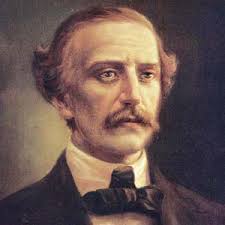
For the next thirty years, the country was dominated by two alternating strongmen -- Pedro Santana, whose source of power was the Army, and Buenaventura Baez, who drew his support from Congress. "Each repeatedly exercised sole authority"; greedy and deceitful, "neither one . . . ever performed a constructive act that could be regarded as unselfish." (Crassweller, p. 19)

In 1882 this long national nightmare of "oppressive, corrupt, incompetent, and treasonous government" was trumped by the ascension of Ulises Heureaux, who established a reign of pure tyranny that seemed impossible to surpass -- until the advent of Trujillo. To make matters worse, he borrowed profligately from foreign sources under exceedingly onerous terms, using the funds for his personal use and to maintain his police state. Just before his demise, he resorted to the desperate measure of selling disputed border territory to the despised Haitians. By the time he was assassinated in 1899, the government was weak, unstable, and bankrupt, and France, Germany, and the United States were threatening to intervene to protect their nationals and their bonds. (Crassweller, p. 21)

After President Theodore Roosevelt proclaimed the Roosevelt Corollary to the Monroe Doctrine in 1905 -- which enabled the United States to take over the administration of Dominican customs revenues and use the proceeds to retire the country's debt -- a brief period of tranquility ensued, coincident with the benign rule of General Ramon Caceres. But when Caceres met the same fate as Heureaux in 1911, civil war erupted and anarchy returned, prompting President Woodrow Wilson to order the occupation of the Dominican Republic by the United States Marines in 1916.
While the military administration pacified the countryside, revived the economy, conducted a land survey, promoted public education, and built a road network that connected the far-flung regions, native dissatisfaction and repudiation led to sporadic outbreaks of guerilla warfare and subsequent brutal repression by the Americans. President Warren Harding ended the occupation in 1922. Elected in 1924, for the next six years President Horatio Vasquez governed with a rare honesty, a progressive and cooperative spirit, the nurturing of public order, and a respect for civil rights.

Rafael Trujillo was in one respect an offspring of the Americans, a product of the Dominican National Guard, which was established by the Occupation in 1917. He was admitted to the Guard and commissioned as a Second Lieutenant in 1919.
The life of the Army perfectly suited the young son of a small-time commodities dealer from San Cristobal. It was the traditional path to power, glory, and even wealth in Spanish America; it embodied his penchant for order and discipline, action and achievement; its uniforms, parades, music, and pomp foreshadowed his fixation on drama, display, and self-promotion. (Crassweller, p.44)

Trujillo rose rapidly through the ranks until, concurrent with the transformation of the National Police (formerly the National Guard) into a Brigade in August 1927, he was promoted to Brigadier General. Nine months later he was named Chief of the newly-created National Army. Along the way, he initiated the machinations that would become his trademarks, enriching himself through his control of military procurement and planting cronies in key positions. He enjoyed the unquestioning confidence of President Vasquez, who refused to credit reports of irregularities in the Army's budget and of Trujillo's plotting to overthrow his government.
Vasquez was betrayed on February 22,1930, when Trujillo allowed a small rebel force -- which he had surreptitiously supplied with old army rifles -- under the leadership of Rafael Estrella Urena, a charismatic, ambitious politician from Santiago, to enter the capital, Santo Domingo, while keeping his own troops -- far superior in numbers and armament -- sequestered in the Ozama Fortress. Besieged and outmaneuvered, Vasquez appointed Estrella Urena to the office of Secretary of the Interior and the Police, from which he succeeded to the Presidency on March 3rd, when Vasquez and his Vice-President resigned.

But it was Trujillo who held the substance of power; under the ruse of preserving order in the city and preventing bloodshed, he ordered the Army to take possession of all weapons held by rebel forces.
An election was scheduled for May 16; the next two months were a dress rehearsal for the ruthless tactics Trujillo would employ to subjugate his countrymen for a generation. By coercion and bribery, he secured the Presidential nomination of the Confederation Party. Using the Army as his personal instrument, he embarked on a systematic campaign of terror and intimidation directed at his opponents, the Alliance Party, which enjoyed greater popular support.
A body of storm troopers -- known as La 42 -- dealt out random beatings, disrupted meetings of the opposition, and kidnapped and murdered presumed enemies. Leaders of the Alliance were fired upon on the outskirts of Santiago; their pants and hats were riddled with bullet holes. Confronted by Trujillo thugs, members of the Central Electoral Board resigned on May 7th and were quickly replaced by Trujillo designates. On May 15th, the Alliance Party withdrew its candidates on the grounds that the election would be nothing but a farce.
Trujillo and his Vice-Presidential running mate, Estrella Urena, received 224,000 votes, which exceeded the number of registered voters in the country. The best estimates concluded that perhaps 25 per cent of the eligible public showed up to ratify what had already been decreed. The two officials were sworn in on August 16, 1930. The Era of Trujillo had begun.

A fierce hurricane blew through the city of Santo Domingo on September 3rd, killing 2500, injuring 8000 (out of a population of 80,000), and leveling 10,000 buildings. The disaster presented Trujillo not only the opportunity to demonstrate his limitless reserves of energy and his superb administrative skills; it provided a pretext for the National Congress to suspend constitutional guarantees, to invest the new President with extraordinary powers, and, four years later, to change the name of the capital to Ciudad Trujillo. In the chaos of the crisis, more opponents were executed by roving goon squads, their bodies doused with gasoline and cremated alongside hurricane victims.

Having attained the pinnacle of his ambitions, Trujillo was determined to stay there. His formula was simple: extreme centralization of executive authority and brutal suppression of all disagreement. "Discontent with the regime, indifference toward the regime, opposition toward the regime, all found a common denominator in persecution by Trujillo." (Ornes, p. 66)
During his first year in office, at least one thousand Dominicans on his blacklist were killed. Thousands of others were imprisoned and tortured. An entire generation of domestic leaders was eliminated. Fearing for his life, former collaborator -- and dupe -- Estrella Urena fled to New York, where he lived in exile for eight years. (Ornes, p. 67)
The legislative branch of the government was commandeered through the formation of a political party, the Party of General Trujillo, officially constituted on August 16, 1931. All decisions and nominations were strictly controlled by its namesake. No Dominican in public life, business, the professions, or the arts could survive outside its ranks. With no competitive political purpose, yet accumulating vast reserves through a ten per cent fee deducted from the paychecks of all its members, it transitioned into a social service organization -- dispensing medicine and meals for the poor, making welfare payments, financing church construction, and funding highway and agricultural projects. (Crassweller, p. 100)
After the submission came the conversion. Trujillo craved the approbation of all Dominicans. Through fear, the carrot of personal advancement, or vulgar bribery, people soon learned that they had to be vocally on the Chief's side, since apathy was as sinful as subversion. The lure of public office converted many doubters, though often at the cost of repeated humiliations -- long waits in the outer office, press attacks, social snubs, and obligatory eulogies -- since Trujillo believed that "men served best when they were trampled upon and degraded." (Ornes, p. 102)
Along with the conversion of the high-born and the aspiring came the institutionalization of two other doctrines: one which demanded endless praise for the dictator, an adulation increasing over the years to deification; and one which proclaimed the nullity of all others and their dignification only at the pleasure of Trujillo. (Crassweller, p. 117)
During Trujillo's second term -- he was reelected President in 1934 -- his strong man rule evolved into a truly authoritarian government. The Party became a state within a state, as local leaders were required to report to headquarters on all developments within their districts. In 1937 a law was passed that permitted the President to assume the duties of any Secretaryships of State that might be vacant.
That same year Trujillo augmented his reputation as a merciless butcher when he committed his most heinous crime: the genocide of 18,000 Haitians -- his solution to the centuries-old problem of Haitian encroachment into Dominican territory. Driven by overpopulation and the depletion of natural resources, Haitians had long been penetrating the border and settling on abandoned land -- and, in the process, ravaging Dominican agriculture and cattle-raising, usurping the currency, corrupting the language, grafting voodooism and cultism onto the established Catholic faith, and importing their public health problem. (Crassweller, pp. 150-151)
At the same time he was in discussions with Haitian President Stenio Vincent on a border treaty -- which was signed in the spring of 1936 -- Trujillo was engaged in a devious plot to undermine his government. When he learned that important underground agents in Haiti had been discovered and killed, on October 2, 1937, he gave the order to launch the carefully-coordinated Army attacks that would result in the death of thousands.

The killing spree would become known as the the "Parsley Massacre," a name derived from the shibboleth soldiers employed to determine whether border inhabitants were native Dominicans or immigrant Haitians. Asked to identify a sprig of parsley, or perejil, those whose French Creole accent rendered them incapable of pronouncing the Spanish trilled "r" marked themselves as Haitians destined for extermination.
As twenty thousand innocents were cut down by gunfire, drowned in seawater, or decapitated, Trujillo was reported to have made a hacking motion with his hand and to have remarked, "While I was negotiating, they were going sha-sha-sha," imitating the chopping sound of a machete cutting through flesh. (Crassweller, p. 155) Afterward, attempting to justify the purge, he issued a Mein Kampf apologia entitled Estudios Del Terror Y Los Terrors De La Historia, in which he propounded his own ideological brand of hatred.
The slaughter of the Haitians generated an international scandal and elicited a unanimous rebuke from all of Latin America and the United States. Threatened with the revocation of American recognition by Congressman Hamilton Fish, Trujillo eventually agreed to an indemnity payment of $750,000 -- later reduced to $525,000 through the bribing of Haitian government officials, many of whom appropriated most of the settlement money to themselves, leaving a pittance for the victims' survivors.
Stung by worldwide condemnation of the massacres, Trujillo chose to renounce the Presidency in 1938 and install his first surrogate, Jacinto Peynado; lacking resolution and leadership ability, preferring leisure and indolence to the perquisites of power, he was perfectly suited to the role. He accepted with equanimity the embarrassing, diabolical reduction of his personal staff from a corps of adjutants to a single guard and his office from a suite to one room, even as he was elevated in title.

Trujillo used the respite to showcase the stability of his regime even in his absence, to attempt to repair his shattered image, and to debut on the world stage. On June 30, 1939, he sailed on a four-month voyage that took him to Miami, to Washington D.C. for an audience with President Roosevelt, to the World's Fair in New York City, to the Mediterranean for a brief pre-war cruise, and back to the United Sates before returning home through Miami, where he met and rehabilitated his former colleague Estrella Urena, allowing him to return to his homeland two months later, "saddened and broken after eight years of exile and poverty." (Crassweller, p. 176)
Peynado, afflicted with the last stages of diabetes, died on March 7, 1940; he was succeeded the next day by Trujillo's second puppet, Manuel Troncoso de la Concha. Ten years prior Troncoso had been jailed on suspicion of conspiring with the Alliance; now he swore an oath of loyalty to the Constitution -- and to Rafael Trujillo, Supreme Chief and Director of the Dominican Republic.

The highlight of Troncoso's administration -- and the culmination of Trujillo's career up to that point -- was the latter's self-appointment as Ambassador Extraordinary on Special Mission to Washington, where on September 24, 1940, he and Secretary of State Cordell Hull, after four years of strenuous negotiations, signed a treaty terminating the United States' administration of Dominican customs and finances. Although funds collected by the Dominican government would still be deposited in a New York City bank and distributed to Dominican bondholders by a bank officer, Trujillo's propaganda machine used the occasion to launch an extensive media blitz lauding him as the country's financial savior.
Of particular interest to me is a dramatic offer Trujillo's delegate to the Evian Conference made in July 1938: to admit to the country up to 100,000 Jewish refugees from Europe. Although his motives were suspect -- critics said he wanted to "whiten" the population -- Trujillo himself contributed a 26,000-acre tract of land. In May 1940, eight hundred immigrants established an agricultural colony at Sosua, a remote area on the northern coast. Disheartened by the harsh pioneering environment, far removed from the urban commercialism that had ordered their lives, most eventually relocated to the United States, leaving behind a quaint memorial to the anomalies of history. (Crassweller, p. 200)
In February 1942, Trujillo discarded Troncoso. Perched astride a prancing, pure-blooded Arabian stallion, he welcomed a delegation of Dominican and Trujillo Party leaders bearing the mandatory tributes and the Presidential nomination. Trying to control his energetic mount, Trujillo responded with a rallying cry that swept the nation: "And I will go ahead on horseback." (Crassweller, p. 195)

World War II marked a watershed in the Era of Trujillo and in the development of the Dominican economy. With commodities in short supply, world prices for Dominican agricultural products -- sugar, coffee, cocoa, tobacco -- soared, as did the national budget. On July 21, 1947, Trujillo presented a check to a representative of the country's bondholders in full payment of its foreign debt. The same year a Central Bank was founded; one of its first actions was to issue a national currency, the peso.
During the immediate post-war period, the regime tolerated a modicum of liberal activity -- or rather the contrived appearance of such activity -- and allowed a Labor Confederation to emerge from hibernation. A two-week sugar strike broke out in January 1946; it was settled with concessions to the workers and without violence or reprisals (although several leaders were later assassinated), after which the labor movement quietly expired.
In March 1946, by permitting fictitious puppet parties to operate as presumed oppositionists, Trujillo lured the Communist -- or Popular Socialist -- Party into the open just long enough to smother it. When it organized a large public meeting in Ciudad Trujillo, government agents created incidents sufficient to warrant police intervention and strong repressive measures. Communists were jailed, killed, and exiled; the Party was outlawed in June 1947.
By now Trujillo had perfected his formula for managing his inner circle. By playing one henchman against another, by alternating reward and punishment, by elevating and crushing his underlings with startling rapidity and regularity, he allowed no one to challenge his supremacy. The careers of Paino Pichardo and Alvarez Paulino are instructive.
From 1939 to 1945 Pichardo was Trujillo's right hand man. In January 1945, he fell from grace, losing his positions, his honorary posts, even his car. The next year he was recalled to Secretary of the Presidency, only to relinquish that office in January 1947 for a far lesser one, Inspector of Embassies and Legations. Two years later he held briefly a higher administrative position, before succumbing to a banishment that would last for six years.
Paulino replaced him in January 1949, and by 1951 had garnered so much power that his voice was said to be synonymous with Trujillo's. A medium-dark mulatto, weighing 250 pounds, dubbed the Magic Eye for his glass organ, naturally arrogant, he looked and played his role well, which was that of a mercenary thug. While he delighted in the pomp and pageantry of his position, he harbored no political ambitions, which kept him free from suspicion -- for a time. When Trujillo tired of him, an investigation into his affairs revealed graft on a large scale. In May 1955 he was imprisoned; later he was exiled, where he rendezvoused with the seven million dollars he had secreted abroad.
The Dominican exile community feverishly plotted to overthrow Trujillo. During the first six months of 1947, one thousand soldiers of fortune mustered on the Cayo Confites islet on the north coast of Cuba -- whose government and President, Dr. Ramon Gras, quietly aimed a blind eye, if not a blessing, in their direction -- and planned an invasion of the Dominican Republic. Before they could set sail, however, Cuban authorities, acting under pressure from its hemisphere partners, including the United States, to whom Trujillo had issued protests, rounded up the revolutionaries (they were later released), and seized their arms, equipment, and aircraft.
Undaunted, the forces reassembled, first in Costa Rica, then in Guatemala, from which they launched an abortive air attack on June 18, 1948. Of six planes that took off, only one managed to land on the Dominican coast -- near Puerto Plata. Ten expeditionaries aboard were killed; five were taken prisoner (and pardoned two months later) -- which prompted to Trujillo to announce on June 20th: "I am still here and those who tried to overthrow me are dead." (Crassweller, p.241)
Seemingly beset by enemies, Trujillo increased the size of his Army to 18,000, a number singularly disproportionate to the significance of the country in the Hemisphere. He controlled the high command the same way he controlled his subordinates: diluting it among several contenders, who were subjected to promotion and demotion with maddening irrationality.

Declining to run for a fifth Presidential term, in the early summer of 1951, Trujillo nominated the most docile and reliable of his six brothers, Negro, most recently, General of the Army, to replace him. His swearing in on August 16, 1952, was strictly symbolic; he was not permitted to make a public address, and he followed his brother out of the Palace after the latter had been accorded the highest honors in a ritualistic ceremony.
The regime firmly entrenched, Trujillo spent much of the next three years out of the country -- making a spectacular entrance as delegate to the United Nations, trailing a retinue of twelve guards and aides in his wake, posing as a staunch anti-Communist; conferring with President Eisenhower in Washington, D.C.; witnessing the victory of his national polo team, captained by his son Ramfis, at Delray Beach, Florida; visiting Madrid, where, in fact, he was intimidated by the elegance and richness of the Spanish culture and the grand pronouncements of his host, Generalissimo Franco; bowing before Pope Pius XII, "eulogizing the faith and expressing the devotion of the Dominican people to Rome"; returning again to the United States for stops in New York, Washington, New Orleans, and Jacksonville -- in a whirlwind of activity. (Crassweller, p. 272)
On August 16, 1954, Trujillo proclaimed "The Year of the Benefactor," and awarded himself the "Great Collar of the Fatherland," studded with twenty-five jewels, one for each year of his reign. His family members were similarly honored. His wife Dona Maris was christened "Woman of the Americas" during a meeting of the Pan-American Round Table in the Dominican capital. Ramfis at twenty-seven was promoted to a lieutenant general. Twelve-year-old Rhadames Trujillo was memorialized by a newly-erected bridge spanning the Ozama River.

In 1955 Trujillo stood at the summit of his era. No new threats were visible from abroad. Vice-President Nixon had paid his respects in March in his Caribbean tour. The nation's economy was dynamic and sound, its budget having grown from $7 million in 1930 to $120 million. The capital had been transformed into a clean and modern city, with impressive boulevards and public buildings, like the Palace of Fine Arts and the Palace of Justice. A water supply system extended into every town and hamlet. One hundred new churches, sixty new hospitals, three-hundred-eighty new bridges, and eighteen hundred miles of new highway dotted the landscape. Fifty new agricultural colonies were in operation
.

Responding to a diplomat commenting on the progress of the last twenty-five years, Trujillo said: "I have done it all by myself, all by myself." (Crassweller, p.290)
On December 20, 1955, the curtain rose in Ciudad Trujillo on a lavish World's Fair dedicated to Rafael Trujillo and his contributions to Dominican life. Forty-two nations participated. Dignitaries from around the world eulogized the man and his country. His twenty-three-foot-tall bronze equestrian statue, his five stars, and enough busts and portraits of him to fill a museum dominated every street and vista of the fairgrounds -- including the Temple of Peace, a vast Coney Island imported from the United States, and a $1 million Fountain of Music. His daughter Angelita was crowned the Queen -- modeling an $80,000 jewel-encrusted gown, carrying a $75,000 scepter and brooch, and escorted by 140 attendants. (Crassweller, p. 290)
In a heavily gold-braided uniform topped by plumed bicorne, Trujillo reviewed parade after parade, never tiring of listening to one sycophant after another deliver speeches of homage.

But the fair cost $30 million, almost a third of the nations' budget, and produced little revenue, attracting neither investment nor visitors, other than a few dignitaries, one of whom, U. S army commander W. K. Harrison, would be suitably impressed. "I feel that the Dominican people have every right to be proud othe inspired and forceful leadership of His Excellency Rafael Trujillo Molina," he wrote in the visitors' guest book.
In a sense, the great fair foreshadowed a decline, for beneath all the extravagant glitter was the rottenness of a "tyranny whose constructive aspects would fade away into megalomania and whose every despotism would endure and increase." (Crassweller, p. 299.)

The symbol of an intensified reign of terror was a violent, depraved brute named Johnny Abbes. Abbes learned his trade -- espionage and political subversion -- working in the Embassy in Mexico, where one of his duties was to monitor the activities of Dominican exiles. Trujillo discovered his talents, became infatuated by the man -- granting him personal access at all times -- and appointed him Chief of the notorious SIM, the Military Intelligence Service. Under Abbes, the SIM expanded enormously, bringing under its umbrella political surveillance, censorship, passport and immigration control, and foreign operations and subversion -- including an attempted assassination of the President of Costa Rica, probably the assassination of the President of Guatemala (although the suspicions are unconfirmed), and the attempted overthrow of the government of Honduras.
The rise of Fidel Castro posed new dangers for Trujillo -- the deposed Fulgencio Batista took refuge in the Dominican Republic before fleeing to Portugal -- and he was quick to respond, levying a special tax, raising a $50 million defense fund, and, detrimentally, dealing a serious blow to the country's economic health.
His fears were not unfounded. On June 14, 1959, a C-46 plane which had been furnished by Venezuela took off from a Cuban air base with fifty-six fighting men aboard. Landing at Constanza, in the Cordillera Central, the attackers were soon repulsed; a handful of survivors fled onto the wild mountain country. Six days later, two invading yachts, escorted to within a few miles off shore by Cuban frigates, were destroyed by the Dominican Air Force at Puerto Plata, killing all aboard.
The invasions of 1959 were the product not only of foreign meddling and exile plotting, but also of extensive underground activity in the Dominican Republic. In retaliation, repression and vengeance descended on large segments of the population. Families were dislocated. Many persons lost their jobs. Physical persecutions reached a new intensity. Higher taxes on rice, meat, and salt added to the general resentment. Corruption and graft were widespread. (Crassweller, p. 359)
The growing dissident movement took its name, 1J4 (Catorce de Junio), from the date of the June failure. Students, businessmen, physicians, farmers, engineers, even seminarists, many in their twenties and thirties, formed conspiratorial cells, approached the Venezuelan government for arms and munitions, and mapped out the Dominican coastline for clandestine landing strips. They set January 21, 1960, as the day to blow up Trujillo at his cattle farm.
When information leaked out a day before the planned the assassination, Trujillo and Abbes struck back with unprecedented vengeance. Four thousand persons were arrested, some of whom were sentenced to prison for up to thirty years. Most were sons and daughters of upper and middle-class families, including three men married to the beautiful Mirabel sisters, Maria Theresa, Minerva Argentina, and Patricia Mercedes.

One of the sisters had reportedly resisted Trujillo's amorous advances with a stinging slap in the face. Incensed by their independence and disaffection, in November Trujillo ordered Johnny Abbes to "terminate the Mirabel problem." On the afternoon of November 25th, on their homeward journey after bringing food and clean clothing to their imprisoned husbands in the fortress of Puerto Plata, the three women were kidnapped in their own jeep by SIM agents. Turning off the main road, the abductors stopped beside a clump of sugar cane at the edge of a deep ravine, dragged the victims to separate corners of the field, and clubbed them to death. They threw the bodies in the jeep, and drove it off a precipice to make the murder appear to have been a tragic accident.
But the unmistakable Trujillo imprint could not be so easily eradicated. Nor would it be passively tolerated as just one more in a series of brutal crimes. It generated national outrage, focused the world's attention on the depths of the dictator's depravity, and tempered the resolution of those committed to his demise.
The government tried to shore up the regime. Low cost homes and more hospitals were built. Trujillo began attending baptisms on a regular basis. In a series of spurious political moves, Trujillo resigned as leader and member of the Dominican Party. Negro stepped aside in favor of the scholarly, religious, austere Dr. Joaquin Belaguer. A bogus campaign to return Trujillo to the Presidency was orchestrated over the airwaves, in letters, and at public gatherings. Trujillo ran for and was elected Governor of the Santiago Province, pretending to have put national affairs behind him, and immediately declined to serve.
For years Trujillo had harbored an antipathy towards Romulo Betancourt of Venezuela, originating in Betancourt's association with Dominican exiles, but evolving over time into a deep-seated, personal hatred, until, by 1959, it had advanced to the level of a pathological obsession. When Betancourt was elected President in 1958, Trujillo tried to undermine his government; when that failed and Betancourt protested to the Organization of American States, Trujillo became infuriated. On June 24, 1960, a remote detonator exploded a car just as Betancourt's Cadillac was passing by. Badly burned on his hands, arms, and face, Betancourt survived. But the international repercussions were traumatic.

Two months later, Foreign Ministers of the Hemisphere condemned the participation of the Dominican Government in acts of aggression and intervention against Venezuela. They agreed to the complete breaking of diplomatic relations and to the partial interruption of economic relations with the Dominican Republic by all member states.
Because a single man, corrupted by thirty years of absolute power, had sworn death to his enemy, the Dominican Republic lost the support of the United States, ending the relationship that had long been the central pillar of its foreign policy; it was expelled from the family of nations that comprised the New World; and, possibly for the first time in history, collective sanctions were imposed against a nation in a time of peace because of its aggression towards another. (Crassweller, p. 419.)
Further evidence of Trujillo's erratic mentality was the scandalous campaign he instigated against the Catholic Church early in 1960 when it refused to grant him the title "Benefactor of the Church."

The United States, fearful that deteriorating economic conditions in the Dominican Republic as a result of the sanctions would become a breeding ground for a Communist revolution, encouraged -- and may have abetted -- the assassination of the dictator for whom, thirty years ago, they had created an Army.
Its disenchantment with Trujillo was on full display in a letter dated October 27, 1960, from consul general Henry Dearborn (the embassy had been downgraded to a consulate general following the Venezuelan affair) to his superior in Washington. Dearborn wrote: "If I were Dominican, which thank heaven I am not, I would favor destroying Trujillo as being the first necessary step in the salvation of the country, and I would regard this, in fact, as my Christian duty." Three weeks earlier the CIA had issued its "Plans for the Dominican Internal Opposition and Dominican Desk for the Overthrow of the Trujillo Government"; it provided for the delivery of three hundred rifles and ammunition to a site fourteen miles east of Cuidad Trujillo.
While this never happened, three CIA-supplied .38 caliber Smith & Wesson pistols and three .30 caliber M-1 carbines with clips and ammunition eventually fell into the hands of a cabal, despite a May 29th cable from Washington to Dearborn warning ". . . we must not run risk of U. S. association with political assassination, since U. S. as matter of general policy cannot condone assassination. This last principle is overriding and must prevail in doubtful situation."
On the evening of May 30, 1961, after his ritualistic evening walk from his residence down to the sea and a ninety minute round trip to the San Isidro air force base accompanied by his armed forces secretary, Trujillo settled into the back seat of his 1957 curtained, four-door, light-blue Belair Chevrolet with a briefcase full of government papers and $110,000 in cash, and instructed his chauffeur, Captain Zacarias de la Cruz, to take him to his hacienda in San Cristobal. He had no telephone or escort, other than three submachine guns and several revolvers.
As his car passed the Agua Luz Theater, four men lounging beside a black Chevrolet specially equipped with a powerful engine scrambled aboard, and set off in rapid pursuit. From the front seat, Antonio de la Maza, brother of the aforementioned scapegoat and purported suicide, leveled a sawed-off Remington shotgun and fired through the prey car's curtained rear window. Hearing a cry of surprise from the Generalissimo -- "Cono, I've been hit!" -- Zacarias turned to look when a second blast struck him in the shoulder. The Trujillo car braked to a halt, while the chase car swung around to the opposite side of the road; the two faced each other like ancient battleships.
Zacarias shouted that they needed to make a run back to the capital, but when the wounded Trujillo lurched for the back door, revolver in hand and intent upon retaliation, he grabbed a machine gun and opened fire on the assassins, who by now had bolted their own car and flattened themselves on the pavement. Angered by the fusillade and fearing his quarry might escape, de la Maza lunged across the fifty-foot gap. He saw the bent form of a man still wearing his military cap weaving in and out of the light from his car's headlights. He aimed at point blank range and pulled the trigger. Trujillo emerged in the eerie light, staggered first toward San Cristobal, then toward Ciudad Trujillo, and then fell face forward.
De la Maza approached the body and angrily kicked the corpse over on its back. Pronouncing a brief eulogy -- "This hawk won't kill any more chickens" -- he seized Trujillo's gun and delivered the coup de grace: one more bullet that shattered his jaw, dislodged a dental bridge, and lodged behind his left ear.
The four-minute firefight left all four assailants wounded and a light-blue Chevrolet riddled with fifty-two bullet holes.
A chronological narrative hardly does justice to the megalomania of the man and the tyranny of his regime.
The Dominican despot was a unique phenomenon, no ordinary human being. Every personality trait was "in some measure or degree a buttress for the central arch of his being, the power instinct." (Crassweller, p. 73)
He had tremendous energy of body and will, a disciplined and controlled energy, often rising at 4:00 AM, informing himself of all recent developments within the country and the world before he reached his office at 9:00, where he spent a grueling nine or ten hours at his desk, working longer and harder than any of his subordinates. (Ornes, p. 74)

An intense desire for money reinforced his will to power. He possessed an abiding faith in its potency, and believed it the primary motivator of human behavior, and that every man and thing had its price. (Crassweller, p. 74)
Related to his drive for power was his sense of ego, an extraordinary need for adulation and the proliferation of his name, reflecting not just a preternatural vanity but an awareness of how it could be used politically (Crassweller, p. 74).
Trujillo regarded himself as an instrument of God, a chosen man with a great mission to perform. He longed for people to fawn on him and call him the greatest humanitarian ever. Praising the Generalissimo at every opportunity became a must, and certainly a requirement for any Dominican seeking advancement (Ornes, p. 78).
Among the scores of titles Trujillo collected were: Benefactor of the Fatherland; Generalissimo of all Armed Forces; First and Greatest of the Dominican Chiefs of State; Restorer of the Financial Independence of the State; Liberator of the Nation; and Protector of the Beaux Arts and Letters (Ornes, p. 228)

By common consent the Chief was the country's preeminent statesman, journalist, hero, teacher, man of justice, guardian of the people, and genius of thought. Eighteen hundred busts were erected overlooking parks, streets, colleges, hospitals, and offices throughout the country. Every town, sports event, or billiard game had to be dedicated to the Benefactor of the Fatherland. The humblest dirt-floor hut bore the sign: "In this house Trujillo is Chief." Three national holidays were proclaimed for him: the date of his birth, the date he was first elected President, and the date the capital's name was changed. (Ornes, pp. 228-229)
Elevated to the status of a science, the deification of the Benefactor under the slogan "God and Trujillo" reached its apogee with this 1955 acclamation in La Nacion: "Men are not indispensable. But Trujillo is irreplaceable. For Trujillo is not a man. He is a political force. An economic force. A social force . . . A cosmic force . . . Those who try to compare him to his ordinary contemporaries are mistaken. He belongs to the category of those born to a special destiny." (Ornes, p. 6)

Trujillo's love of finery both sustained his ego and elevated his status before the country peasants and the working class. He was meticulously vain about his person and his wardrobe. He owned four hundred pairs of shoes, two thousand suits and uniforms, a world renowned collection of ten thousand neckties, and several gold-braided, ostrich-plumed white hats, which he considered the supreme symbols of his rank. (Crassweller, p.78)
Other essential elements of his power pattern were a deep and universal distrust of associates and acquaintances (he had no real friends) and an instinct for secrecy and unpredictability. The relationships he did have were manipulative. His subordinates never knew when a sudden change would undercut their very existence. A surprise promotion could be just as unsettling, since it was so detached from the usual sequence of cause and effect that it was no less a source of insecurity than the loss of employment. (Crassweller, p.76)

Trujillo's appetite for women was legendary, and can be viewed as another instrument of power. He enjoyed a steady supply, probably thousands, divided between those who had no objection to being discovered and presented to him and those who had to be pressured or induced into availability by eager patrons seeking to win his favor. He made his selections from a group of thirty brought to him twice a week, and generally slept with them once or twice. Women who tried to resist might find their reputations vilified, their employment terminated, or their families similarly persecuted.

Trujillo was no revolutionary. Unlike other twentieth-century totalitarian dictators, he professed no social philosophy, no political ideology, no theoretical doctrine. To him, politics was not a system; it was an outlet for his megalomania, and the apparatus by which he acquired, retained, and exercised absolute power. Pragmatic to the extreme, he was at various times a friend of the Nazis, an apologist for the Soviet Union, a champion of the Church, and a voluble anti-Communist. (Ornes, p. 86)
For thirty years Trujillo ruled the Dominion Republic with a complete absence of scruples, institutionalizing terror in place of any democratic principles or human freedoms. One would be hard-pressed to find an atrocity that was not committed either by him or in his name by others as amoral and immoral as he was: arrest, kidnapping, imprisonment without trial, torture, exile, death, starvation, government-inflicted poverty. Since such punishments could be meted out merely for speaking against the regime, enthusiastic approval of the Benefactor was one's safest recourse, while indiscriminate distrust was commonplace, since any person could turn out to be an informer.
The regime implemented typical totalitarian methods to subdue the population. Every person over sixteen had to carry an identification card. All businessmen had to register with the government, and the right of any citizen to practice his profession was subject to the unconditional judgment of the President. Army check points were established every twenty-five miles on roads throughout the country. All mail was opened in transit and wiretapping was routine. Peasants needed a permit to relocate -- although they could be forcibly uprooted from a tract of land needed for Trujillo's sugar plantations.
A vast network of internal Secret Service agents classified all residents as suspected subversives and kept them under surveillance, using a far-flung network of spies and informers -- many of them domestic servants. Fifty civilians at the Palace of Communications manned bulky radios and tape recorders designed to intercept and record domestic and foreign phone conversations. Torture was commonplace at an interrogation center stocked with all the requisite equipment, including an electric chair purchased from Venezuela. Men of talent or potential prominence were enticed to collaborate or subject to persecution or imprisonment. (Ornes, pp. 103-107)
Trujillo turned the Dominican state into a personal business, a "merciless capitalist enterprise of which he was the sole proprietor, " (De Galindez, p. xxi) and built for himself an immense fortune. From the outset, his government was a regime of plunder, employing its extensive powers of legislation, taxation, customs collections, and quantitative regulations -- plus the criminal tactics of thievery, embezzlement, bribery, and blackmail -- to facilitate his infiltration and control of all economic enterprises in the country and funnel their revenues into his private coffers, his family's, or those of his military and civilian henchmen. (Ornes, p. 235)
With the proceeds from his army pilfering, even before he came to power, Trujillo acquired his first cattle farm, which would grow exponentially into the largest real estate holding in the country. Cattle lands yield meat and dairy products, and within a short time he had cobbled together first meat and milk monopolies, then rice and salt monopolies, sharply boosting the domestic prices of all these staples. Owners of the country's largest insurance company and tobacco factory were coerced into selling to him.
His wife acquired a bank at which government employees were strongly encouraged to cash their paychecks -- before payday, and for a discount.
Other businesses which Trujillo owned or controlled, through dummy corporations or family or crony proxies, included: glassware, edible oils, alcoholic beverages, textiles, firearms, pharmaceuticals, footwear, furniture, meat packing, shipping, and the representation of American manufacturers in the Dominican Republic.
Trujillo came late to the sugar business. He began buying sugar mills in 1948, when the price of sugar rose to five cents a pound. After building one of the largest sugar mills in the world at Rio Haina, he discovered that he did not have enough sugar cane to feed it. Through blackmail, intimidation, and physical dispossession, nearby landowners, large and small, were forced to sell out. Trujillo's sugar corporations were awarded tax exemptions, watered by government irrigation projects, accessed by government-built roads, and manned with soldiers, convicts, and forced labor. When the price of sugar fell, Trujillo sold his sugar holdings to a government bank for $50 million in cash, later buying them back on generous credit terms. By 1957 Trujillo dominated 70 per cent of the domestic sugar industry.
By the end of his life, Trujillo, the reigning family, or their surrogates figured as major stockholders of practically every profitable corporation in the country. They controlled nearly 80 per cent of the country's industrial production and employed 45 per cent of the active labor force, which, combined with the 15 per cent who worked for the state, meant that 60 per cent of Dominican families depended on his will. (Pons, p. 365)
With every product a person bought, domestic or imported, lining the Benefactor's pockets, with a system of taxes and compulsory contributions to the Dominican Party skimming off more accessible revenues, Trujillo's empire was generating for him personally an annual income of $36 million, and perhaps another $15 million for those who administered it -- an amount equal to the combined national expenditures for education, public health, labor, social security, and public works. At his death, in 1961, he had accumulated total wealth estimated at one-half a billion dollars.
Whether or not, as his propaganda machine trumpeted, it should be attributed to his leadership, one cannot deny that the Dominican Republic experienced significant material progress during his rule. The number of manufacturing outlets tripled, while output increased ten times from 1935 to 1954. Industrialization transformed the administrative character of the capital, luring tens of thousands of workers from the countryside to the city, many of whom, however, lacking education, joined the ranks of the marginalized unemployed.
Ambitious construction programs saw a proliferation of ports, highways, airports, bridges, irrigation works, public buildings, churches, and housing projects. Health services and sanitation improved dramatically, making urban life more attractive, reducing the mortality rate, and fostering greater fertility among Dominican women. School enrollment increased ten times, although the prescribed curriculum invariably included a thorough indoctrination in the cult of hero-worship and in the infallibility, wisdom, and benevolence of Rafael Trujillo.
But the stark truth is that a very small portion of the population shared in the country's putative material progress. While the few who enjoyed the good graces of the Benefactor got richer, many more got poorer -- as a consequence of the inflated prices of the commodities controlled by the family monopolies, the shortage of jobs as foreign investors, fearful of government appropriation, fled the country, and the onerous excise and indirect taxes which further reduced the standard of living.
Trujillo's love of finery both sustained his ego and elevated his status before the country peasants and the working class. He was meticulously vain about his person and his wardrobe. He owned four hundred pairs of shoes, two thousand suits and uniforms, a world renowned collection of ten thousand neckties, and several gold-braided, ostrich-plumed white hats, which he considered the supreme symbols of his rank. (Crassweller, p.78)
Other essential elements of his power pattern were a deep and universal distrust of associates and acquaintances (he had no real friends) and an instinct for secrecy and unpredictability. The relationships he did have were manipulative. His subordinates never knew when a sudden change would undercut their very existence. A surprise promotion could be just as unsettling, since it was so detached from the usual sequence of cause and effect that it was no less a source of insecurity than the loss of employment. (Crassweller, p.76)
Trujillo's appetite for women was legendary, and can be viewed as another instrument of power. He enjoyed a steady supply, probably thousands, divided between those who had no objection to being discovered and presented to him and those who had to be pressured or induced into availability by eager patrons seeking to win his favor. He made his selections from a group of thirty brought to him twice a week, and generally slept with them once or twice. Women who tried to resist might find their reputations vilified, their employment terminated, or their families similarly persecuted.
Trujillo was no revolutionary. Unlike other twentieth-century totalitarian dictators, he professed no social philosophy, no political ideology, no theoretical doctrine. To him, politics was not a system; it was an outlet for his megalomania, and the apparatus by which he acquired, retained, and exercised absolute power. Pragmatic to the extreme, he was at various times a friend of the Nazis, an apologist for the Soviet Union, a champion of the Church, and a voluble anti-Communist. (Ornes, p. 86)
For thirty years Trujillo ruled the Dominion Republic with a complete absence of scruples, institutionalizing terror in place of any democratic principles or human freedoms. One would be hard-pressed to find an atrocity that was not committed either by him or in his name by others as amoral and immoral as he was: arrest, kidnapping, imprisonment without trial, torture, exile, death, starvation, government-inflicted poverty. Since such punishments could be meted out merely for speaking against the regime, enthusiastic approval of the Benefactor was one's safest recourse, while indiscriminate distrust was commonplace, since any person could turn out to be an informer.
The regime implemented typical totalitarian methods to subdue the population. Every person over sixteen had to carry an identification card. All businessmen had to register with the government, and the right of any citizen to practice his profession was subject to the unconditional judgment of the President. Army check points were established every twenty-five miles on roads throughout the country. All mail was opened in transit and wiretapping was routine. Peasants needed a permit to relocate -- although they could be forcibly uprooted from a tract of land needed for Trujillo's sugar plantations.
A vast network of internal Secret Service agents classified all residents as suspected subversives and kept them under surveillance, using a far-flung network of spies and informers -- many of them domestic servants. Fifty civilians at the Palace of Communications manned bulky radios and tape recorders designed to intercept and record domestic and foreign phone conversations. Torture was commonplace at an interrogation center stocked with all the requisite equipment, including an electric chair purchased from Venezuela. Men of talent or potential prominence were enticed to collaborate or subject to persecution or imprisonment. (Ornes, pp. 103-107)
Trujillo turned the Dominican state into a personal business, a "merciless capitalist enterprise of which he was the sole proprietor, " (De Galindez, p. xxi) and built for himself an immense fortune. From the outset, his government was a regime of plunder, employing its extensive powers of legislation, taxation, customs collections, and quantitative regulations -- plus the criminal tactics of thievery, embezzlement, bribery, and blackmail -- to facilitate his infiltration and control of all economic enterprises in the country and funnel their revenues into his private coffers, his family's, or those of his military and civilian henchmen. (Ornes, p. 235)
With the proceeds from his army pilfering, even before he came to power, Trujillo acquired his first cattle farm, which would grow exponentially into the largest real estate holding in the country. Cattle lands yield meat and dairy products, and within a short time he had cobbled together first meat and milk monopolies, then rice and salt monopolies, sharply boosting the domestic prices of all these staples. Owners of the country's largest insurance company and tobacco factory were coerced into selling to him.
His wife acquired a bank at which government employees were strongly encouraged to cash their paychecks -- before payday, and for a discount.
Other businesses which Trujillo owned or controlled, through dummy corporations or family or crony proxies, included: glassware, edible oils, alcoholic beverages, textiles, firearms, pharmaceuticals, footwear, furniture, meat packing, shipping, and the representation of American manufacturers in the Dominican Republic.
Trujillo came late to the sugar business. He began buying sugar mills in 1948, when the price of sugar rose to five cents a pound. After building one of the largest sugar mills in the world at Rio Haina, he discovered that he did not have enough sugar cane to feed it. Through blackmail, intimidation, and physical dispossession, nearby landowners, large and small, were forced to sell out. Trujillo's sugar corporations were awarded tax exemptions, watered by government irrigation projects, accessed by government-built roads, and manned with soldiers, convicts, and forced labor. When the price of sugar fell, Trujillo sold his sugar holdings to a government bank for $50 million in cash, later buying them back on generous credit terms. By 1957 Trujillo dominated 70 per cent of the domestic sugar industry.
By the end of his life, Trujillo, the reigning family, or their surrogates figured as major stockholders of practically every profitable corporation in the country. They controlled nearly 80 per cent of the country's industrial production and employed 45 per cent of the active labor force, which, combined with the 15 per cent who worked for the state, meant that 60 per cent of Dominican families depended on his will. (Pons, p. 365)
With every product a person bought, domestic or imported, lining the Benefactor's pockets, with a system of taxes and compulsory contributions to the Dominican Party skimming off more accessible revenues, Trujillo's empire was generating for him personally an annual income of $36 million, and perhaps another $15 million for those who administered it -- an amount equal to the combined national expenditures for education, public health, labor, social security, and public works. At his death, in 1961, he had accumulated total wealth estimated at one-half a billion dollars.
Whether or not, as his propaganda machine trumpeted, it should be attributed to his leadership, one cannot deny that the Dominican Republic experienced significant material progress during his rule. The number of manufacturing outlets tripled, while output increased ten times from 1935 to 1954. Industrialization transformed the administrative character of the capital, luring tens of thousands of workers from the countryside to the city, many of whom, however, lacking education, joined the ranks of the marginalized unemployed.
Ambitious construction programs saw a proliferation of ports, highways, airports, bridges, irrigation works, public buildings, churches, and housing projects. Health services and sanitation improved dramatically, making urban life more attractive, reducing the mortality rate, and fostering greater fertility among Dominican women. School enrollment increased ten times, although the prescribed curriculum invariably included a thorough indoctrination in the cult of hero-worship and in the infallibility, wisdom, and benevolence of Rafael Trujillo.
But the stark truth is that a very small portion of the population shared in the country's putative material progress. While the few who enjoyed the good graces of the Benefactor got richer, many more got poorer -- as a consequence of the inflated prices of the commodities controlled by the family monopolies, the shortage of jobs as foreign investors, fearful of government appropriation, fled the country, and the onerous excise and indirect taxes which further reduced the standard of living.

Just as tragic a legacy as pervasive poverty, urban blight, and rural displacement -- as tragic as the persecutions and violence, the extortions and peculations -- were the attrition of the Dominican soul, the destruction of the Dominican spirit, the triumph of universal despair, the erosion of human respect and dignity, and the corruption of public morals through fear and suspicion -- in a place where every neighbor was a spy; where the most one could hope for was to attract the approving nod of the Dictator and get rich as fast as possible; where every man had to remove his hat in the Dictator's presence; where only two words had definite meaning, uncertainty and terror; and where, at the proper time and place, each subject had to pay dutiful homage by reciting the pagan panegyric: Thanks to God and Trujillo. (Ornes, p. 4)
Today Dominicans celebrate the date of Trujillo's assassination as a national holiday.
REFERENCES
Crassweller, Robert D. Trujillo: The Life and Times of a Caribbean Dictator. New York: The MacMillan Company, 1966.
Diederich, Bernard. Trujillo: The Death of the Dictator. Princeton: Markus Wiener Publishers, 2000.
Galindez, Jesus de. The Era of Trujillo. Tucson, Arizona: The University of Arizona Press, 1973.
Moya Pons, Frank. The Dominican Republic: A National History. Princeton: Markus Wiener Publishers, 1998.
Ornes, German E. Trujillo: Little Caesar of the Caribbean. New York: Thomas Nelson & Sons, 1958.
Moya Pons, Frank. The Dominican Republic: A National History. Princeton: Markus Wiener Publishers, 1998.
Ornes, German E. Trujillo: Little Caesar of the Caribbean. New York: Thomas Nelson & Sons, 1958.